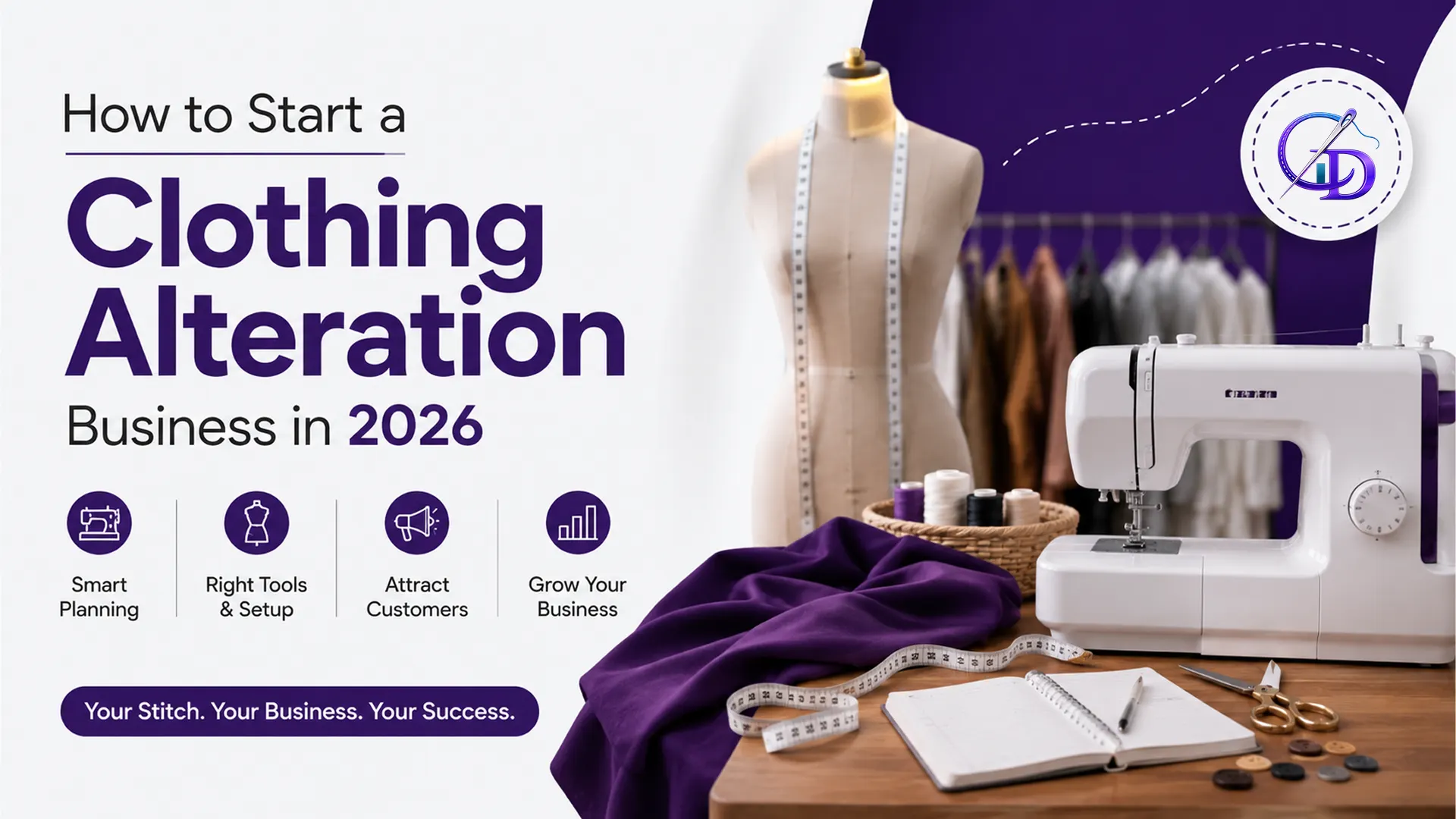
Starting a clothing alteration business can be a practical way to build a service-based business around a skill that people continue to need. Customers regularly need trousers shortened, dresses adjusted, jackets fitted, waistlines changed, and garments repaired or reshaped.
The challenge is not only knowing how to alter clothing. A successful clothing alteration business also needs good pricing, accurate measurements, reliable order management, clear communication, and a way to keep track of customers and deadlines.
If you are considering starting an alteration shop in 2026, this guide explains the main steps, from choosing your services and setting prices to attracting customers and managing day-to-day operations.
1. Decide What Alteration Services You Will Offer
Before spending money on equipment or renting a shop, decide exactly what services you want to provide.
You could start with common alterations such as:
- Trouser shortening and hemming
- Waist adjustments
- Sleeve alterations
- Dress alterations
- Jacket and coat alterations
- Zip replacement
- Garment repairs
- Taking in or letting out garments
- Bridal and formalwear alterations
- School uniform alterations
- Bespoke adjustments
You do not have to offer every service from day one.
A smaller service list can make it easier to establish consistent pricing and turnaround times. As your skills, customer base, and workload increase, you can add more specialist services.
Consider Your Target Customers
Think about who you want to serve.
Your customers might include:
- Residents
- Office workers
- Wedding customers
- Students
- Retail clothing customers
- Businesses needing uniform alterations
- Boutiques and clothing stores
- Brides and formalwear customers
Understanding your target customer will also help you decide where to operate and which services to promote.
2. Create a Simple Clothing Alteration Business Plan
You do not need a complicated business plan to get started, but you should understand your expected costs and income.
Your plan should cover:
- Services you will provide
- Target customers
- Local competitors
- Startup costs
- Monthly operating costs
- Service pricing
- Expected number of orders
- Marketing costs
- Equipment requirements
- Business location
- Turnaround times
Estimate Your Startup Costs
Your alteration shop startup costs will depend on whether you work from home, rent a small studio, open a shop, or operate from another business location.
Potential expenses include:
- Sewing machines
- Overlockers and other equipment
- Cutting table
- Steam iron
- Mannequins
- Measuring equipment
- Thread and sewing supplies
- Work tables and storage
- Shop signage
- Rent and utilities
- Insurance
- Website costs
- Marketing
- Business software
Starting from home can reduce your initial expenses, while a physical shop can provide better visibility and walk-in traffic.
Calculate your expected monthly expenses before deciding how much you need to charge.
3. Choose the Right Location
Location can have a major effect on an alteration business.
If you are opening a physical shop, look for an area where your target customers already spend time. High streets, shopping areas, clothing districts, bridal shops, dry cleaners, and areas with offices can all provide potential opportunities.
However, a high-rent location is not automatically the best option.
Consider:
- Monthly rent
- Foot traffic
- Parking
- Public transport
- Nearby clothing retailers
- Local competition
- Shop visibility
- Space for fittings
- Storage requirements
If you operate from home or a small studio, you can put more effort into local search, referrals, partnerships, and online bookings.
4. Buy the Equipment You Actually Need
A new alteration business can quickly spend too much on equipment.
Start with tools that match the services you plan to provide.
Depending on your work, you may need:
- Sewing machine
- Overlock machine
- Steam iron
- Ironing board
- Cutting table
- Dressmaking scissors
- Measuring tapes
- Pins and needles
- Seam ripper
- Tailor’s chalk
- Threads
- Zips and other replacement materials
- Garment racks
- Storage containers
- Full-length mirror
- Mannequin
Invest in dependable equipment rather than buying everything at once.
As your workload grows, you can add equipment based on the services generating the most revenue.
5. Set Your Clothing Alteration Prices
Pricing is one of the most important parts of starting an alteration business.
Avoid setting prices simply by looking at what another tailor charges. Your price needs to account for your time, materials, overheads, skill level, and the complexity of the work.
For example, shortening a pair of trousers may be relatively straightforward, while altering a structured jacket or formal dress may require significantly more time.
Consider These Factors When Pricing
Ask yourself:
- How long will the alteration take?
- What materials will I use?
- Does the garment require a fitting?
- Is the garment difficult to work with?
- Is there a risk of damaging expensive fabric?
- Will the customer require multiple fittings?
- What are my business overheads?
You can create a basic pricing list for common alterations while providing individual quotes for complicated work.
Clear pricing also helps customers understand what they are paying for before work begins.
6. Create a Proper Measurement and Fitting Process
Accurate measurements are essential for an alteration business.
A simple process could be:
Customer consultation → Garment inspection → Measurements → Alteration details → Price → Due date → Fitting → Final inspection → Collection
Record important information during the fitting instead of relying on memory.
For each order, you may need to record:
- Customer name
- Contact details
- Garment type
- Measurements
- Required alterations
- Customer instructions
- Price
- Deposit or payment
- Collection date
- Fitting date
- Notes about the garment
This becomes increasingly important when you have dozens or hundreds of active orders.
7. Keep Alteration Orders Organized
One of the biggest challenges for a growing clothing alteration business is keeping track of orders.
A busy shop may have garments at different stages:
- New order
- Waiting for fitting
- In progress
- Ready for fitting
- Completed
- Waiting for collection
- Collected
If you use paper notes, spreadsheets, or separate messaging apps, information can easily become difficult to find.
This is where alteration shop management software can help.
GarmentDesk allows tailoring and alteration businesses to keep customer information, measurements, orders, and other business information organized in one system.
8. Keep Customer Measurements Available
Customers may return several times throughout the year.
Instead of taking measurements from scratch every time, keeping accurate customer records can make repeat visits easier.
A digital customer record can contain:
- Personal details
- Measurements
- Previous orders
- Alteration history
- Notes
- Preferences
- Payment information
For an alteration shop handling regular customers, having this information readily available can reduce unnecessary paperwork and make appointments easier to manage.
9. Build Relationships With Local Businesses
You do not have to depend entirely on individual customers.
Local businesses can become valuable sources of regular alteration work.
Consider approaching:
- Clothing boutiques
- Bridal shops
- Formalwear stores
- Wedding planners
- Dry cleaners
- Uniform suppliers
- Fashion retailers
- Vintage clothing stores
- Costume businesses
For example, a bridal shop may need a reliable alteration partner for customers purchasing wedding dresses.
A local clothing retailer may also refer customers who need garments adjusted after purchase.
Build these relationships gradually and make sure you can handle additional work before accepting large volumes of orders.
10. Create an Online Presence
Customers increasingly search online before visiting local businesses.
At a minimum, your alteration business should have:
- A professional website
- Google Business Profile
- Business address or service area
- Phone number
- Opening hours
- List of services
- Pricing guidance
- Customer reviews
- Photos of your work
- Contact or booking option
Create separate pages or sections for important services such as:
- Trouser alterations
- Dress alterations
- Wedding dress alterations
- Suit alterations
- Clothing repairs
- Zip replacement
Use the language your customers actually search for rather than filling pages with technical SEO terms.
11. Use Local SEO to Attract Nearby Customers
If your business depends on local customers, local SEO should be part of your marketing strategy.
For example, instead of only targeting:
“clothing alterations”
you could target searches such as:
“clothing alterations in [your city]”
“trouser alterations near me”
“dress alterations in [your area]”
Your website should clearly explain where you provide services.
Your Google Business Profile should also contain accurate business information and regularly updated photos.
Customer reviews can be particularly useful because people often want reassurance before leaving expensive clothing with an alteration specialist.
12. Make Your Alteration Business Easy to Contact
A customer should not have to search through your website to find out how to contact you.
Make important information easy to access:
- Phone number
- Email address
- Opening hours
- Location
- Booking information
- Service information
- Estimated turnaround times
You can also provide an online enquiry form for customers who want to ask about a specific garment before visiting.
13. Manage Payments and Invoices Properly
As your business grows, keeping track of payments becomes more important.
Record:
- Order total
- Deposit
- Balance due
- Payment date
- Payment method
- Refunds where applicable
A proper system can reduce confusion when customers return to collect their garments.
If you offer deposits for expensive alterations, make your payment terms clear before starting the work.
14. Track Every Order From Start to Collection
A good alteration business needs a reliable workflow.
For example:
Step 1: Customer Enquiry
Record the customer’s details and understand what alteration they need.
Step 2: Garment Assessment
Check the garment, fabric, construction, and requested changes.
Step 3: Measurements
Take and record the required measurements.
Step 4: Quote
Provide the customer with the alteration price.
Step 5: Order Creation
Record the order, due date, measurements, and instructions.
Step 6: Alteration
Complete the work according to the customer’s requirements.
Step 7: Quality Check
Inspect the garment before marking it as completed.
Step 8: Customer Collection
Notify the customer when the garment is ready and record the collection.
A consistent workflow makes it easier to handle a larger number of orders without losing track of individual garments.
15. Decide When to Use Tailoring Software
You may be able to manage a few orders with a notebook or spreadsheet.
As the business grows, however, manual systems can become difficult to maintain.
You may need tailor shop software when:
- You have many active orders
- Customers frequently return
- You need to store measurements
- Multiple employees handle orders
- You have regular fittings
- You need payment records
- Customers need order updates
- You operate more than one location
GarmentDesk is designed to help tailoring and alteration businesses manage customers, measurements, orders, payments, and daily operations from one platform.
You can explore GarmentDesk’s tailoring software to see how it can fit into an alteration business workflow.
16. Review Your Business Performance
Once your alteration business is operating, track what is actually working.
Useful numbers include:
- Number of new customers
- Repeat customers
- Number of orders
- Average order value
- Most requested services
- Completed orders
- Outstanding orders
- Revenue
- Monthly expenses
- Referral sources
You may discover that one service generates much more revenue than another.
Use that information when deciding where to focus your marketing and which services to expand.
How Much Does It Cost to Start an Alteration Business in 2026?
There is no single startup cost because the business model makes a significant difference.
A home-based alteration service can require substantially less capital than a high-street shop.
Your initial budget may need to cover:
- Equipment
- Materials
- Workspace
- Rent
- Insurance
- Business registration
- Website
- Marketing
- Software
- Utilities
- Signage
Before opening, calculate both your one-time startup costs and your expected monthly expenses.
This will give you a clearer idea of how many orders you need each month to cover your costs.
Is a Clothing Alteration Business Profitable?
A clothing alteration business can be profitable when pricing, workload, operating costs, and customer demand are managed carefully.
Profitability depends on factors such as:
- Your local demand
- Service prices
- Number of orders
- Labour costs
- Rent
- Material costs
- Turnaround time
- Repeat customers
- Type of alterations offered
Higher-value services such as bridal, formalwear, bespoke adjustments, and complex garment alterations may generate more revenue per order, but they can also require more time and expertise.
The goal is not simply to take more orders. It is to understand which services and customers make sense for your business.
Start Your Clothing Alteration Business With a Clear System
Starting an alteration business in 2026 requires more than sewing skills. You need a practical pricing structure, reliable order workflow, accurate customer records, and a simple way to manage the growing number of details involved in daily operations.
Start small if necessary. Build a customer base, understand which services are in demand, improve your workflow, and invest in tools as the business grows.
Once you begin handling more customers and orders, alteration shop management software can help reduce the amount of manual administration involved.
GarmentDesk provides tools designed for tailoring and alteration businesses, helping you organize customers, measurements, orders, payments, and other day-to-day tasks in one place.
If you are planning to start a clothing alteration business in 2026, building a reliable process from the beginning can make it much easier to manage the business as it grows.