Managing customer measurements is one of the most important parts of running a tailoring or alteration business. A small mistake in a measurement can lead to an incorrect fit, rework, customer complaints, and wasted time.
Many tailor shops still record measurements on paper, in notebooks, on printed order forms, or on loose sheets. While this may work when the business is small, finding the right measurement record becomes harder as the number of customers and orders increases.
So, how do you manage customer measurements without paper records?
The answer is to keep customer measurements in a digital system where they can be stored with the customer’s profile, accessed when needed, and updated as measurements change.
Why Paper Measurement Records Become Difficult to Manage
Paper records may seem simple, but they can create several problems for a busy tailoring business.
Papers Can Be Lost or Damaged
Measurement sheets can be misplaced, damaged by water, or accidentally thrown away. If a customer’s previous measurements are unavailable, staff may need to measure the customer again.
Finding Old Measurements Takes Time
When measurements are stored in notebooks or files, employees may have to search through multiple pages to find a customer’s previous order.
This becomes especially difficult when a tailor shop handles hundreds or thousands of customers.
Measurements Can Be Written Incorrectly
Handwritten measurements can sometimes be difficult to read. A number that is unclear on paper can result in the wrong measurement being entered during production.
Customer Information Gets Separated
A customer’s measurements may be written in one place while their order details, contact information, and payment information are stored somewhere else.
Keeping these details together makes customer management much easier.
How to Manage Customer Measurements Without Paper Records
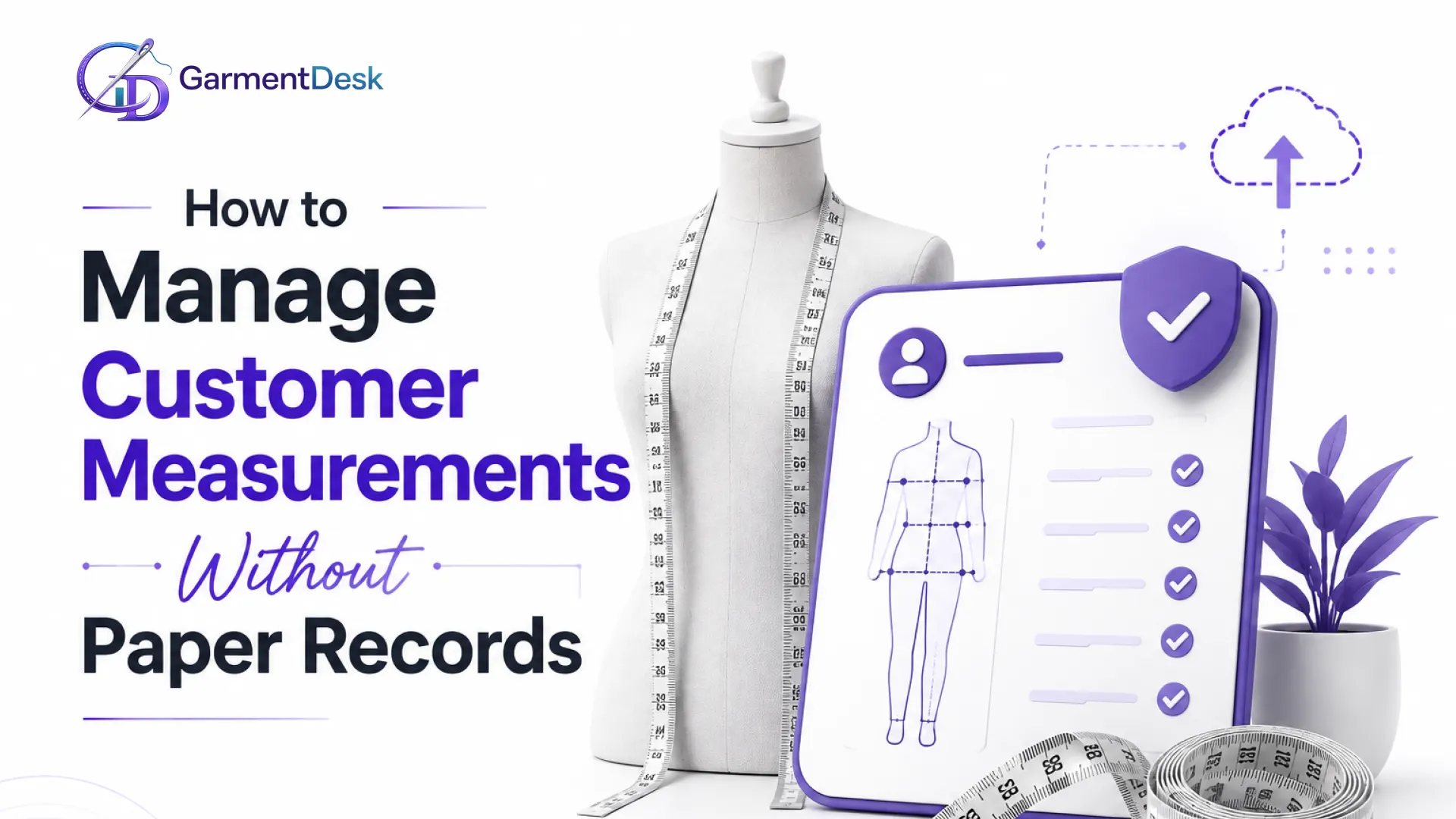
A digital customer measurement system can replace physical measurement sheets with organized electronic records.
Instead of writing measurements on paper and storing them in folders, staff can add them directly to a customer’s digital profile.
For example, a customer profile can contain:
- Customer name and contact details
- Previous measurements
- Garment preferences
- Order history
- Alteration details
- Notes and special instructions
- Previous order information
When the customer returns, staff can find the profile and review the existing information before creating a new order.
1. Create a Digital Customer Profile
The first step is to create a digital record for each customer.
Rather than creating a new paper measurement sheet every time someone places an order, store the customer’s information in one central profile.
This gives your team a consistent place to find customer information.
With GarmentDesk, tailoring businesses can keep customer information and order details organized digitally instead of relying on separate paper records.
2. Store Measurements With the Customer Record
Measurements should be connected to the correct customer rather than stored as independent notes.
For example, a customer’s profile could include measurements such as:
- Chest
- Waist
- Hip
- Shoulder
- Sleeve length
- Trouser length
- Neck
- Inseam
- Jacket length
The exact measurements you record will depend on the type of garments your business makes or alters.
The important point is that the measurements should be easy to find alongside the customer’s other information.
3. Keep Previous Measurements Available
Customers do not always have the same measurements forever. Weight changes, preferred fits, and garment styles can all affect measurements.
Instead of deleting an older measurement record, keep useful previous information available.
This can help your staff compare the customer’s current measurements with previous orders and determine whether an update is necessary.
For repeat customers, having access to previous measurement information can also make the ordering process faster.
4. Update Measurements When They Change
Digital measurement records should not be treated as permanent.
When a customer’s measurements change, update the record so future orders use the correct information.
It is also useful to make notes when a measurement is intentionally different for a particular garment.
For example, a customer may prefer a slightly looser fit for a particular type of clothing. Recording that preference can help your team avoid repeating the same conversation during every visit.
5. Connect Measurements With Order Information
Measurements are only one part of a tailoring order.
Your team may also need to know:
- What garment the customer ordered
- Which fabric was selected
- Alteration requirements
- Delivery or collection date
- Special instructions
- Payment information
- Previous order details
Keeping these details connected reduces the need to search through different notebooks, folders, or spreadsheets.
A digital tailoring management system can bring customer records and order information together in one place.
6. Reduce Errors From Handwritten Records
One of the main advantages of moving away from paper measurement records is reducing problems caused by handwriting.
When information is entered digitally, staff can read the measurements clearly and review the customer’s information before starting production.
This does not eliminate human measurement errors, but it can reduce errors caused by unclear handwriting, misplaced sheets, or copying information incorrectly from one document to another.
7. Make Customer Information Easier to Access
A digital record can be much easier to access than a physical folder.
When a returning customer contacts your shop, your staff can look up their record instead of searching through paper files.
This is particularly useful when multiple employees handle customer enquiries or orders.
Everyone who has the appropriate access can work from the same customer information.
Benefits of Digital Customer Measurement Management
Moving from paper measurement records to digital records can improve several areas of daily shop management.
Faster Customer Service
Staff can find previous measurements and customer details without searching through paper files.
Fewer Lost Records
Digital records are less dependent on keeping physical sheets in the correct folder or location.
Better Order Accuracy
Having measurements and order details together makes it easier to check information before production begins.
Easier Repeat Orders
Returning customers can be served using their existing customer information rather than starting the measurement process from scratch every time.
Better Customer Management
A complete customer record gives your team a clearer view of previous orders, measurements, preferences, and notes.
Digital Measurement Records for Tailors and Alteration Shops
A digital measurement system is useful for more than bespoke tailoring.
Alteration businesses can also use customer records to keep track of previous work and customer preferences.
For example, if a customer regularly brings trousers for alterations, the shop can keep relevant information about their previous alteration requirements.
This can help staff understand what the customer usually requests and reduce repeated questions.
For larger tailoring businesses, digital records can also make it easier for different employees to work with the same customer information.
How to Move From Paper Measurements to Digital Records
You do not necessarily need to move every paper record at once.
A practical approach is to start with your active customers.
Step 1: Identify Important Customer Records
Separate active customer records from old records that are rarely needed.
Step 2: Enter Active Measurements Digitally
Start transferring measurements for customers who regularly place orders.
Step 3: Organize Customer Information
Keep measurements, contact information, preferences, and order details connected to the correct customer.
Step 4: Stop Creating New Paper Records
Once your digital process is working, make it the standard method for recording new measurements.
Step 5: Review the Process With Your Staff
Make sure employees know where measurements are stored and how they should update customer information.
This gradual approach can make the transition easier for a busy tailoring business.
What to Look for in a Customer Measurement System
If you are considering software for digital measurement management, look for features that support the way your shop actually works.
Important features can include:
- Digital customer profiles
- Measurement records
- Customer order history
- Alteration details
- Customer notes
- Order tracking
- Invoicing and payments
- Staff access controls
- Customer notifications
- Reports and business information
The goal is not simply to replace a notebook with software. The system should make everyday customer and order management easier.
Keep Customer Measurements Organized With GarmentDesk
If your tailoring business is still relying on paper measurement sheets, notebooks, or scattered spreadsheets, moving customer information into a digital system can make daily work much easier.
GarmentDesk is designed to help tailoring and alteration businesses manage customers, measurements, orders, payments, and other day-to-day operations from a central system.
If you want to see how the system works for your business, you can also book a GarmentDesk demo.
Final Thoughts
Knowing how to manage customer measurements without paper records can help a tailoring business keep customer information organized and reduce the problems associated with physical paperwork.
Digital customer measurement records make it easier to find previous measurements, update customer information, review order history, and serve returning customers.
For a growing tailor shop or alteration business, replacing paper measurement records with an organized digital system can save time and make everyday operations easier to manage.