Managing several tailoring orders at once can be difficult, especially when each customer has different measurements, garment requirements, fitting dates, and delivery deadlines. A small mistake in tracking one order can lead to delayed deliveries, incorrect alterations, or unhappy customers.
The good news is that tailors can manage multiple orders without losing track by using a clear order management process and the right tools.
GarmentDesk helps tailoring businesses organize orders, customer details, garment measurements, fittings, payments, and delivery dates in one place. This makes it easier to know what work needs to be completed and which orders require attention.
Why Managing Multiple Tailoring Orders Becomes Difficult
A tailor may handle many orders at different stages of production. For example, some garments may be waiting for measurements, while others are ready for fitting or delivery.
Without a proper system, it can be difficult to track:
- Customer names and contact details
- Garment measurements
- Fabric and design requirements
- Order quantities
- Alteration requests
- Fitting appointments
- Production status
- Delivery deadlines
- Pending payments
When this information is spread across notebooks, paper slips, spreadsheets, and messages, the chances of losing important details increase.
Keep All Order Details in One Place
The first step to managing multiple orders is to avoid keeping information in different places.
Every order should include the customer’s details, measurements, garment requirements, deadlines, and current status. This gives tailors and their team a complete view of the work.
Tailor order management software can help businesses store this information digitally and access it whenever needed.
With GarmentDesk, tailoring businesses can manage orders and customer information from one platform instead of depending on multiple manual records.
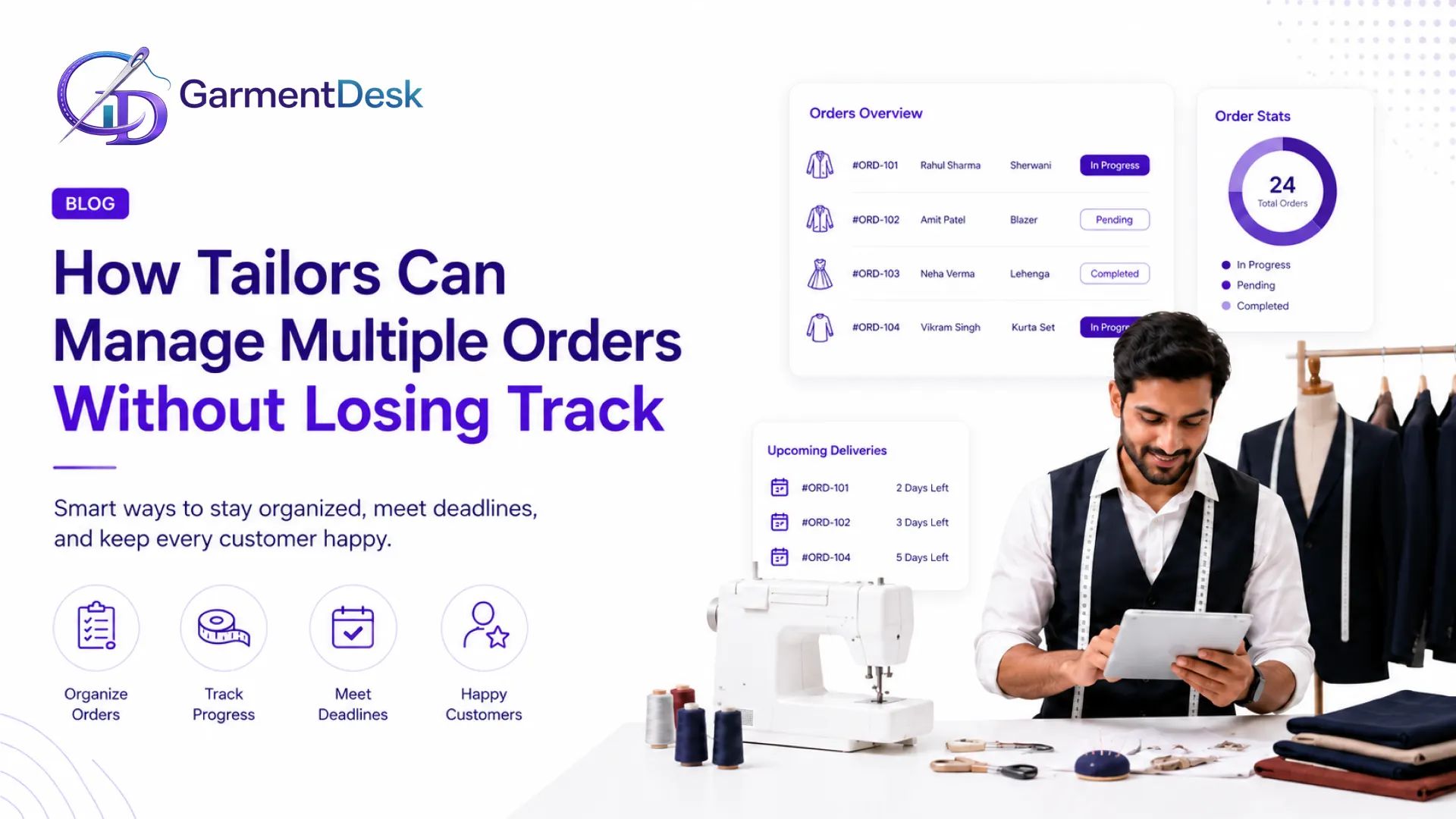
Track Every Order by Its Current Status
One of the easiest ways to avoid confusion is to assign a clear status to every order.
For example, an order may move through stages such as:
- Order received
- Measurements taken
- Fabric selected
- Cutting
- Stitching
- Ready for fitting
- Alterations required
- Ready for delivery
- Completed
When every order has a visible status, tailors can quickly understand what needs to be done next.
This is especially useful when managing a large number of tailoring orders with different delivery dates.
Use a Clear Deadline Tracking System
Missing a delivery date can affect customer trust. Tailors should record the expected delivery date as soon as an order is created.
A good system should make it easy to identify:
- Orders due today
- Orders due this week
- Overdue orders
- Orders that are close to their delivery date
- Orders waiting for customer fittings
By checking deadlines regularly, the team can prioritize urgent work before it becomes a problem.
Store Customer Measurements for Future Orders
Taking measurements repeatedly for returning customers can take time and increase the risk of errors.
A digital customer management system allows tailors to store measurements and access them when a customer places another order.
This can help improve order management by making it easier to:
- Find previous measurements
- Check past orders
- Review customer preferences
- Create repeat orders
- Reduce manual data entry
GarmentDesk includes customer and order management features that help tailoring businesses keep important information organized.
Separate Different Types of Work
Tailoring businesses may handle custom garments, alterations, repairs, and bulk orders. Managing all these jobs in the same workflow can create confusion.
A better approach is to organize work based on the type of service and current production stage.
For example:
- Custom tailoring orders
- Alteration orders
- Garment repair requests
- Bulk or uniform orders
This helps the team understand which jobs require measurements, fittings, alterations, or final delivery.
Improve Communication Between Team Members
When multiple people work on different parts of an order, communication is important.
The person taking measurements, the cutter, the tailor, and the person managing delivery should be able to understand the current status of an order.
Instead of relying only on verbal updates, keep order details and progress clearly recorded.
This reduces problems such as:
- Two people working on the same task
- Missed alteration instructions
- Incorrect measurements
- Confusion about delivery dates
- Orders being marked as complete too early
A centralized tailor shop management system can help everyone work from the same order information.
Use Digital Order Tracking Instead of Paper Records
Paper records can be difficult to search and easy to misplace. They may work for a small number of orders, but they become harder to manage as the business grows.
Digital order tracking makes it easier to:
- Search for an order quickly
- Update production status
- Check delivery deadlines
- Review customer history
- Track pending payments
- Manage multiple orders at once
This gives tailors more control over their daily workload.
Send Updates and Reminders to Customers
Customers often want to know when their garments will be ready. Manual follow-ups can take time, especially when managing many orders.
Order notifications and reminders can help keep customers informed about:
- Fitting appointments
- Order progress
- Delivery readiness
- Pending payments
This can reduce the number of customer calls and messages while helping the business maintain better communication.
Review Your Daily Workload
Tailors should review their open orders at the beginning of each working day.
A simple daily review can help answer questions such as:
- Which orders are due soon?
- Which garments are ready for fitting?
- Which orders are waiting for alterations?
- Which customers need to be contacted?
- Which orders are ready for delivery?
Regular order reviews make it easier to identify delays before they affect the customer.
Manage Multiple Stores from One System
For tailoring businesses operating in more than one location, tracking orders separately can become challenging.
Business owners may need to monitor:
- Orders from each branch
- Staff activity
- Customer records
- Sales and payments
- Pending deliveries
A centralized system helps businesses manage information across locations without switching between separate records.
GarmentDesk provides features designed to support tailoring businesses that need better control over their orders and daily operations.
Avoid These Common Order Management Mistakes
To manage multiple tailoring orders effectively, try to avoid:
Relying Only on Memory
Important measurements, delivery dates, and customer requests should always be recorded.
Using Too Many Separate Records
Keep order details in one organized system instead of spreading information across notebooks, spreadsheets, and messages.
Not Updating Order Status
An order tracking system is only useful when the status is updated regularly.
Ignoring Upcoming Deadlines
Review upcoming delivery dates every day to avoid last-minute delays.
Losing Previous Customer Information
Keep customer measurements and order history available for future orders.
How GarmentDesk Helps Tailors Manage Orders
GarmentDesk is designed to help tailoring businesses organize their daily work in one place.
The platform can support businesses with:
- Order management
- Customer records
- Measurement tracking
- Alteration workflows
- Production tracking
- Invoicing and payments
- Staff access and permissions
- Multiple store management
- Business reports
Instead of spending time searching through paper records or multiple files, tailors can use a more organized system to manage their work.
Conclusion
Learning how tailors can manage multiple orders without losing track starts with creating a clear process for tracking every customer and garment.
By keeping order details in one place, updating production status, monitoring deadlines, storing measurements, and improving team communication, tailoring businesses can reduce mistakes and stay organized.
Using a dedicated tailoring order management software such as GarmentDesk can make it easier to manage daily operations and keep track of every order from the first measurement to final delivery.
Ready to manage your tailoring orders more effectively? Explore GarmentDesk and find a better way to organize your tailor shop.