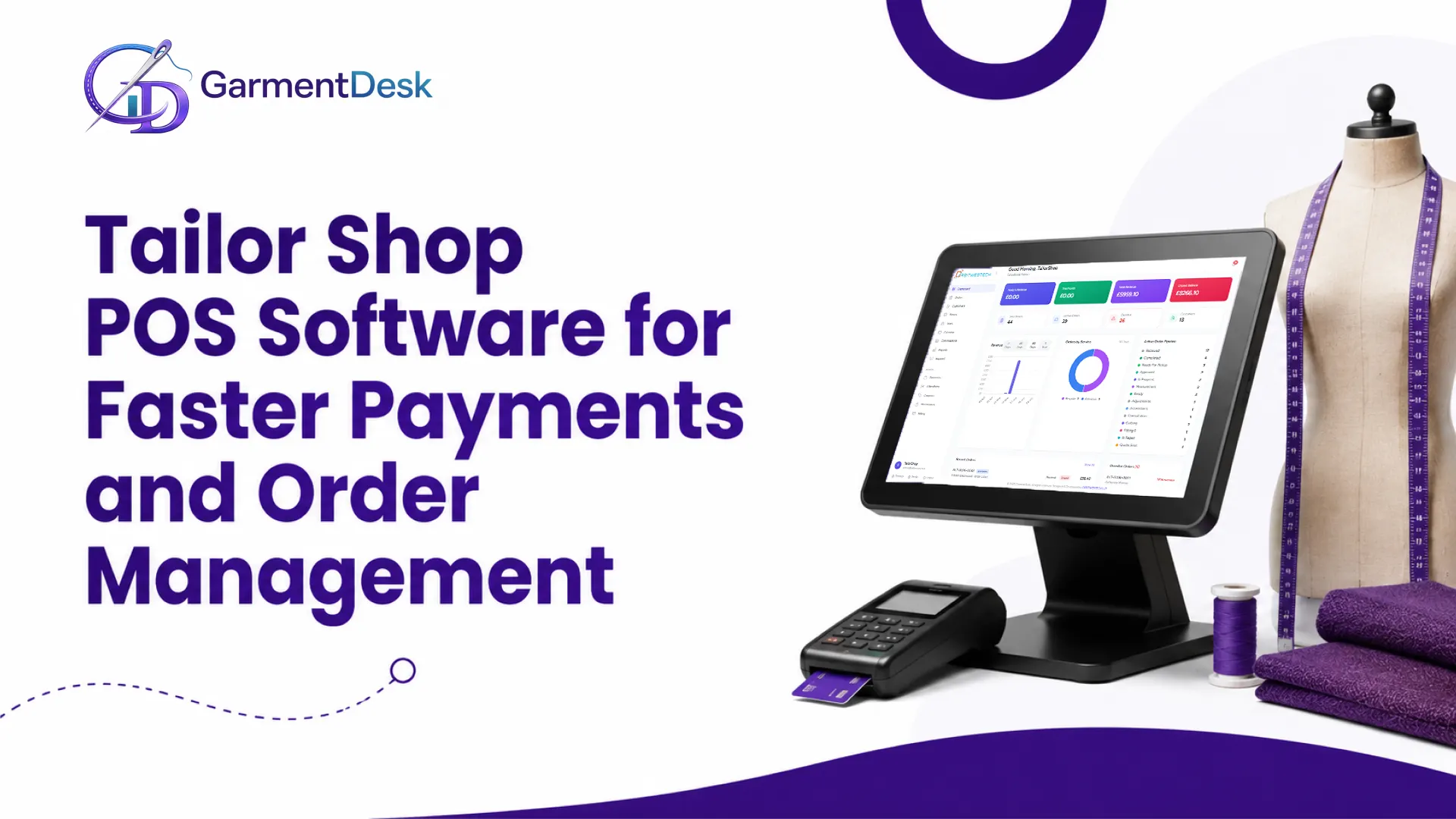
Running a tailoring business involves much more than taking measurements and completing garments. You also need to manage customer details, track orders, collect payments, monitor pending orders, and ensure every garment reaches the customer on time. When these tasks are handled manually, it is easy for information to get lost or payments to be delayed.
Tailor Shop POS Software for Faster Payments and Order Management provides tailoring businesses with a practical way to manage these daily tasks in one system. Instead of relying on notebooks, spreadsheets, receipts, and separate payment records, you can keep customer, order, measurement, and payment information together.
With GarmentDesk, tailor shops can manage their workflow more efficiently while keeping customer information and order details organized.
What Is Tailor Shop POS Software?
Tailor shop POS software is a point-of-sale and business management system designed around the needs of tailoring and alteration businesses. It combines payment processing with features such as order management, customer records, measurements, invoices, notifications, and reporting.
A standard POS system may be designed mainly for retail transactions. A tailoring business needs more because each order can include measurements, garment details, alteration instructions, deadlines, deposits, balances, and multiple stages of production.
GarmentDesk brings these functions together so you can manage an order from the initial customer visit through payment and collection.
Why Faster Payments Matter for Tailor Shops
Payments are an important part of daily shop operations. Many tailoring orders involve deposits when the order is placed and a remaining balance when the garment is completed.
Manual payment tracking can create unnecessary work. Staff may need to check receipts, search through spreadsheets, or contact customers to confirm whether a balance is still pending.
A tailor shop POS system can help by keeping payment information connected to the customer’s order.
Keep Payments Connected to Orders
When payment details are recorded against the correct order, your staff can quickly see:
- The total order amount
- Amount already paid
- Remaining balance
- Payment status
- Order details associated with the transaction
This reduces the need to search through separate records.
Create Invoices and Receipts More Easily
A digital system can make invoicing and payment records easier to manage. Staff can create and maintain transaction records without repeatedly preparing handwritten receipts.
For businesses handling many orders each day, this can save time at the counter and reduce basic recording errors.
Manage Tailoring Orders From One Place
Order management is one of the most important parts of running a tailoring business. Every garment has its own requirements, and customers expect accurate information about their order.
With tailoring management software, you can organize orders according to their current status and keep important details attached to the correct customer.
For example, an order may move through stages such as:
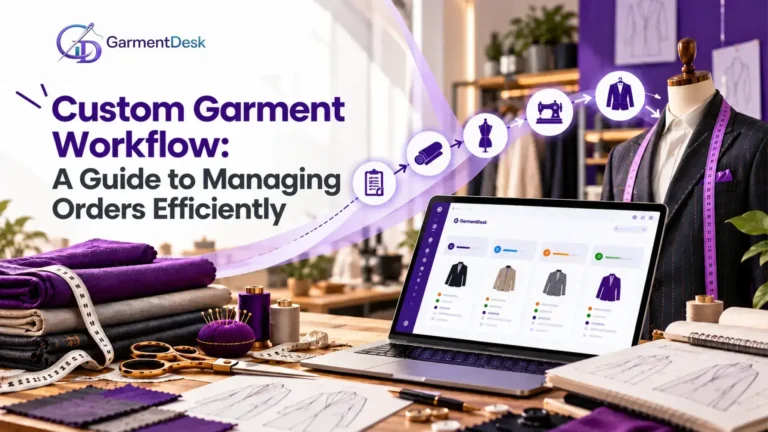
New Order → Measurement → Cutting → Stitching → Alteration → Ready → Completed
Having a clear workflow makes it easier for staff to know what needs attention next.
Store Customer Measurements and Preferences
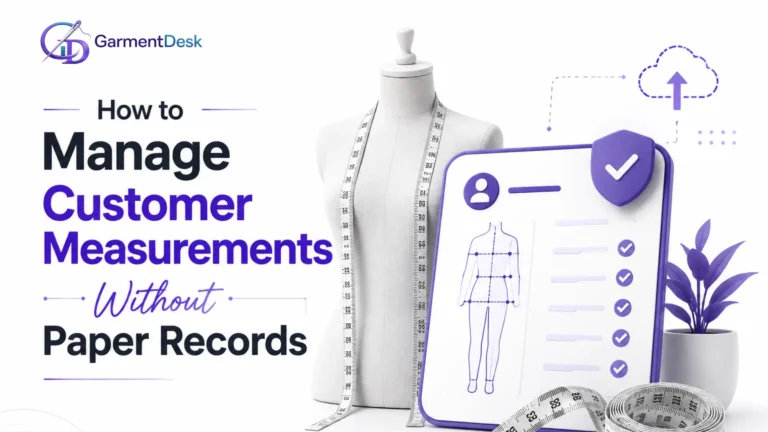
Measurements are often one of the most important pieces of information in a tailoring business. Repeatedly asking existing customers for the same information can also make the customer experience less convenient.
A tailor shop management system can keep customer measurements and order history together. Staff can refer to previous records when a customer returns for another garment.
You can also maintain useful customer information such as:
- Previous orders
- Measurements
- Garment preferences
- Alteration details
- Payment history
- Order notes
This creates a more organized customer record and makes repeat orders easier to handle.
Reduce Order Management Mistakes
Manual order management increases the chance of common problems, such as misplaced notes, incorrect measurements, missed deadlines, or unclear payment status.
A digital tailoring POS system gives your team a central place to record order information.
Instead of having one notebook for measurements and another system for payments, important information can be connected to the same customer and order record.
This is especially useful when several employees are working on different parts of the tailoring process.
Keep Customers Updated
Customers often contact tailoring businesses to ask questions such as:
- Is my garment ready?
- When can I collect my order?
- How much do I still need to pay?
- Has my alteration been completed?
Keeping customers informed can reduce unnecessary phone calls and make the service more convenient.
GarmentDesk includes customer notification capabilities that can help businesses keep customers updated about their orders.
Handle Alterations and Repairs More Efficiently
Tailoring businesses do not only create new garments. Many also handle alterations, repairs, resizing, and adjustments.
These jobs can have different requirements from standard tailoring orders. A proper system can help staff record the requested work, customer information, pricing, deadlines, and progress.
This makes it easier to distinguish between different types of jobs and reduces confusion when several garments are being handled at the same time.
Manage Multiple Locations
If your tailoring business operates more than one store, managing information across locations can become more complicated.
A centralized tailoring software solution can help businesses manage multiple stores while keeping customer and order information organized.
Track Outstanding Payments
Outstanding balances can affect cash flow when they are not monitored properly.
Instead of manually checking individual receipts, staff can use the payment information associated with each order to identify unpaid or partially paid orders.
This makes it easier to follow up on outstanding balances and helps ensure that completed orders do not remain unpaid.
Get a Clearer View of Your Tailor Shop
Good order management is not only about completing today’s work. Business owners also need to understand how the shop is performing.
Tailor shop software can provide useful reports and information about areas such as:
- Sales
- Payments
- Orders
- Outstanding balances
- Customer activity
- Business performance
Having this information in one place can make day-to-day decisions easier.
Tailor Shop POS Software vs. Manual Record Keeping
Manual systems can work for a very small number of orders, but they become harder to manage as the business grows.
| Manual Record Keeping | Tailor Shop POS Software |
|---|---|
| Paper-based order records | Digital order records |
| Separate payment tracking | Payments connected to orders |
| Difficult to search old records | Faster access to customer history |
| Manual balance calculations | Easier payment tracking |
| Limited reporting | Business reports and analytics |
| Higher risk of misplaced information | Centralized information |
| Difficult to manage multiple stores | Multi-store management |
The goal is not to replace the way your tailoring business works. It is to make the administrative side of that work easier to manage.
What to Look for in Tailoring Management Software
Before choosing a POS system for a tailoring business, consider whether it supports the processes you actually use.
Important features include:
Customer Management
Look for customer profiles that can store contact details, measurements, order history, and notes.
Order Tracking
The system should make it easy to see what stage each order has reached and which jobs still require attention.
Payment Management
Choose software that can record deposits, payments, balances, invoices, and transaction information.
Measurement Management
For tailoring businesses, measurement records are essential. The software should make previous measurements easy to access.
Notifications
Customer notifications can help reduce repeated status calls and keep customers informed.
Reporting
Reports can help you understand sales, orders, payments, and other important business information.
Roles and Permissions
If several employees use the system, role-based access can help control what different staff members can view or manage.
Why GarmentDesk Can Be Useful for Tailoring Businesses
GarmentDesk is designed specifically around the operational needs of tailoring businesses rather than treating a tailor shop like a standard retail store.
It brings together functions such as:
- Customer management
- Tailoring order management
- Measurement records
- Alteration workflows
- Invoicing and payments
- Automatic customer notifications
- Multi-store management
- Reports and analytics
- Roles and permissions
If you want to understand how the system works for your specific business, you can also book a GarmentDesk demo.
Make Payments and Order Management Easier
A tailoring business depends on accurate information. When customer details, measurements, order status, and payments are scattered across different records, managing the shop takes more time than it should.
Tailor Shop POS Software for Faster Payments and Order Management provides a more organized approach by bringing these activities into one system.
For a growing tailor shop, the right software can make it easier to track orders, manage payments, maintain customer records, handle alterations, and understand daily business activity.
The result is a simpler workflow for your staff and a more consistent experience for your customers.
Frequently Asked Questions
What is the best POS software for a tailor shop?
The best POS software depends on the shop’s workflow and requirements. A tailoring-focused system should support more than payments and invoices. Customer records, measurements, order tracking, alterations, notifications, and reporting are important features to consider.
Can tailor shop POS software track customer payments?
Yes. Tailor-focused POS software can connect payment records with customer orders, making it easier to identify paid, partially paid, and outstanding orders.
Can tailoring software store customer measurements?
Yes. A tailoring management system can store customer measurements alongside customer profiles and previous order information, making repeat orders easier to manage.
Can POS software manage alterations?
Tailoring-specific software can support alteration workflows by keeping customer information, garment details, alteration instructions, pricing, and order status organized.
Is tailor shop software useful for multiple stores?
Yes. Multi-store management can help businesses operating several locations keep their operations organized while providing better visibility across stores.