
Managing bespoke clothing orders involves much more than recording a customer’s name and taking measurements. A single order can include fabric details, measurements, design preferences, fitting appointments, alterations, payments, production stages, and a final delivery date.
When these details are managed through notebooks, spreadsheets, messages, and separate systems, it becomes difficult to keep track of every order. A bespoke order management system brings these tasks together in one place, helping tailor shops manage custom orders from the first consultation through final delivery.
What Is a Bespoke Order Management System?
A bespoke order management system is software designed to help tailoring businesses manage custom clothing orders and the information connected to them.
Unlike a basic order-entry system, bespoke tailoring software can handle details that are specific to made-to-measure garments, such as:
- Customer measurements
- Garment types
- Fabric and material details
- Style and design preferences
- Fitting appointments
- Alterations
- Production status
- Order deadlines
- Payments and invoices
- Customer communication
- Delivery information
The main purpose is to keep important order information organized so your team can quickly understand what needs to be done at every stage.
Why Bespoke Tailoring Businesses Need Better Order Management
Every bespoke order can be different. One customer may need a suit with several fittings, while another may order multiple shirts with different measurements and fabrics.
Managing this information manually can create several problems.
Orders Can Be Difficult to Track
When order details are spread across paper records, spreadsheets, emails, or messaging apps, employees may spend unnecessary time looking for information.
A centralized tailor shop order management system gives your team one place to check the status of an order.
Measurements Can Be Misplaced
Accurate measurements are essential for bespoke garments. Re-entering measurements or searching through handwritten records increases the possibility of mistakes.
Digital measurement records allow customer measurements to be stored with the relevant customer and order information.
Fittings and Alterations Need Careful Coordination
A bespoke order may require an initial fitting, alteration, second fitting, and final approval.
Without a clear process, appointments or alteration requirements can be overlooked. A structured system makes it easier to see what has been completed and what still needs attention.
Customers Expect Clear Updates
Customers often want to know whether their garment is being prepared, ready for fitting, undergoing alterations, or ready for collection.
With tailor order tracking software, staff can check an order’s current status and provide more accurate updates.
How a Bespoke Order Management System Works
A good system follows the natural workflow of a bespoke tailoring business rather than forcing the business to change how it works.
A typical process can look like this:
Customer → Consultation → Measurements → Order Creation → Production → Fitting → Alterations → Final Approval → Payment → Delivery
Each stage can contain information needed by the team.
1. Create the Customer Profile
The process begins by recording customer information such as:
- Name and contact details
- Previous orders
- Measurements
- Preferences
- Notes
- Order history
Keeping this information together means staff can refer to previous orders when a returning customer places another order.
2. Record the Order Details
The next step is creating the garment order.
Depending on the business, this can include:
- Garment type
- Quantity
- Fabric
- Colour
- Style
- Design specifications
- Special instructions
- Expected completion date
- Price
This creates a central record for the entire order.
3. Store Digital Measurements
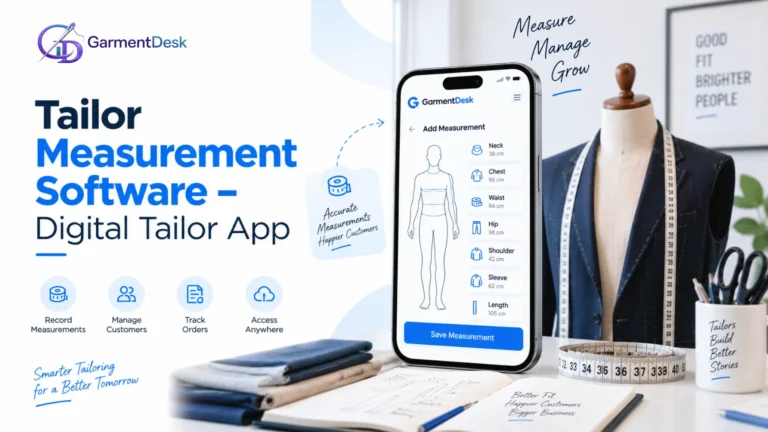
Digital measurement software can help tailors maintain customer measurements in an organized format.
Instead of searching through paper records, staff can access the customer’s measurement information when creating a new garment.
For repeat customers, previous measurements can also provide a useful starting point, while allowing the tailor to update them when necessary.
4. Track Production
Once an order moves into production, the team needs to know what stage it has reached.
For example, an order might move through:
- Order confirmed
- Fabric prepared
- Cutting
- Stitching
- Quality check
- Ready for fitting
- Alteration required
- Final fitting
- Ready for delivery
A clear workflow helps staff identify pending work without relying on memory or multiple spreadsheets.
5. Manage Fittings and Alterations
Fittings are an important part of bespoke clothing.
A bespoke order management system can help connect fitting information with the customer’s order. Staff can record required changes and keep them associated with the correct garment.
This reduces the chance of alteration instructions being separated from the original order.
6. Complete Payment and Delivery
The final stages can include payment tracking, invoicing, collection, shipping, or delivery.
Keeping these details with the order gives staff a complete view of the customer’s transaction.
Key Features to Look for in Bespoke Order Management Software
Not every tailoring business needs the same features. However, several capabilities can make custom clothing order management easier.
Customer Management
Customer management allows businesses to maintain contact information, order history, notes, and other useful details in one place.
This is particularly useful for customers who return regularly for new garments.
Order Management
The system should make it easy to create, update, search, and monitor orders.
A useful order record should provide enough information for staff to understand what the customer ordered without checking several different sources.
Measurement Management
Measurements are central to bespoke tailoring. Look for a system that lets you store and update measurements digitally and connect them with customer records.
Order Status Tracking
A clear status system helps staff understand which orders require attention.
For example:
New → Confirmed → In Production → Fitting → Alteration → Completed → Delivered
The exact workflow can vary depending on the business.
Appointment Management
Fittings and consultations need to be coordinated with production schedules. Appointment management can help businesses organize customer visits and reduce scheduling confusion.
Invoicing and Payments
Connecting orders with invoices and payment information can make financial administration easier and provide staff with a clearer view of outstanding balances.
Reporting
Reports can help owners understand information such as:
- Number of active orders
- Completed orders
- Pending orders
- Revenue
- Customer activity
- Outstanding payments
- Order completion times
These records can also help identify areas where the business may need to improve its workflow.
Manual Order Management vs. Digital Order Management
Many tailoring businesses begin with notebooks, spreadsheets, and messaging applications. These methods can work when the business has a small number of orders.
As order volume increases, however, maintaining consistent records becomes more difficult.
| Manual Management | Digital Order Management |
|---|---|
| Paper-based records | Centralized digital records |
| Measurements may be stored separately | Measurements linked to customers |
| Manual status updates | Structured order statuses |
| More searching between records | Faster access to order information |
| Difficult to monitor many orders | Easier to track multiple orders |
| Separate payment records | Order and payment information can be connected |
| Greater dependence on individual staff | Information can be shared across the team |
The goal of moving to software is not simply to replace paper. It is to create a more organized process for handling the complete customer order.
Benefits of Using a Bespoke Order Management System
Better Order Organization
All important information can be connected to the appropriate customer and order, making it easier for staff to find what they need.
Fewer Administrative Tasks
Digital records can reduce repetitive data entry and the need to maintain multiple spreadsheets or paper files.
Easier Order Tracking
Staff can quickly see where an order stands and identify orders that need attention.
More Consistent Customer Service
When employees can access accurate order information, customers can receive clearer answers about measurements, fittings, payments, and delivery dates.
Easier Management of Repeat Customers
Customer profiles and previous orders can provide useful information when a returning customer places another order.
Better Visibility for Business Owners
A centralized system can provide a clearer picture of active orders, completed work, payments, and overall business activity.
How to Choose the Right Tailor Shop Management Software
Before choosing tailoring management software, consider how closely it fits your existing workflow.
Ask these questions:
Does It Support Bespoke Orders?
Generic retail software may not handle measurements, fittings, alterations, and custom garment specifications effectively.
Can You Track Orders From Start to Finish?
The software should allow your team to see the current stage of each order.
Can Customer Measurements Be Stored Digitally?
This is especially important for businesses that regularly work with repeat customers.
Can Your Team Access Customer and Order Information Easily?
Staff should not need to search through multiple systems to understand an order.
Does It Handle Payments and Invoices?
Connecting financial information with orders can reduce administrative work.
Can It Grow With Your Business?
The system should remain useful as your customer base, order volume, and team grow.
How GarmentDesk Helps Manage Bespoke Orders
GarmentDesk is tailoring management software designed for businesses that need to manage customers, orders, measurements, production workflows, and business operations in one system.
With GarmentDesk, tailoring businesses can organize important information around their everyday workflow, including:
- Customer management
- Order tracking
- Bespoke garment workflows
- Digital measurements
- CRM
- Invoicing
- Business reports
- Production management
Instead of keeping customer details, order information, and business records in separate places, your team can manage them through a centralized system.
When Should a Tailor Shop Move to Software?
There is no specific order volume at which every tailoring business needs software. However, certain signs indicate that your current system may no longer be practical.
You may want to consider bespoke tailoring software if:
- You regularly handle many active orders.
- Staff spend too much time searching for order information.
- Paper measurement records are becoming difficult to manage.
- Customers frequently ask for order-status updates.
- Fittings and alterations are difficult to coordinate.
- You rely heavily on spreadsheets.
- Payment and invoice tracking takes significant manual effort.
- Business owners do not have a clear view of current orders.
The right time to move to a digital system depends on the size and workflow of your business, but the objective is straightforward: make order information easier to manage as the business grows.
Final Thoughts
A Bespoke Order Management System: A Complete Guide starts with a simple idea: every customer, garment, measurement, fitting, alteration, payment, and delivery detail should be easy to find and connected to the correct order.
For bespoke tailors, made-to-measure businesses, and custom clothing shops, organized order management can make everyday work easier while giving customers a clearer experience.
Whether you are replacing spreadsheets or looking for a more structured way to manage a growing tailoring business, choosing software that supports your actual workflow is more important than choosing a system with features you will never use.
GarmentDesk brings customer management, order tracking, digital measurements, CRM, invoicing, and reporting together to help tailoring businesses manage their day-to-day operations in one place.