Managing custom clothing orders can become complicated when a tailor handles multiple customers, measurements, fittings, fabric details, alterations, payments, and delivery dates at the same time.
A single order may go through several stages before the finished garment reaches the customer. If these details are recorded in notebooks, spreadsheets, or separate systems, it can be difficult to know the exact status of every order.
Effective custom clothing order management helps tailors organize the entire process from the first customer inquiry to final delivery. The goal is not simply to record orders but to make sure important information is easy to find, and every order moves through the workshop correctly.
Here are practical best practices that can help tailor shops manage custom clothing orders more efficiently.
1. Record Complete Customer Information
Every custom order should begin with accurate customer information.
Instead of recording only a customer’s name and phone number, maintain details that may be useful for future orders, including:
- Customer name and contact information
- Previous orders
- Clothing preferences
- Measurements
- Fabric preferences
- Design requirements
- Alteration history
- Payment information
- Special instructions
Keeping customer information organized makes repeat orders easier and reduces the need to collect the same details again.
2. Keep Customer Measurements Organized
Measurements are one of the most important parts of custom clothing production. A small mistake can result in an incorrect fit, additional alterations, and delays.
Tailors should maintain a consistent measurement record for each customer. Depending on the type of garment, this may include:
- Chest
- Waist
- Hip
- Shoulder
- Sleeve length
- Shirt length
- Trouser length
- Neck
- Inseam
- Other garment-specific measurements
Digital measurement management can make these records easier to access and update. When a returning customer places another order, the tailor can refer to previous measurements instead of starting from scratch.
3. Create a Clear Order Tracking Process
One of the biggest challenges in a busy tailoring business is knowing what needs to be done next.
A useful tailoring order tracking process should show the current stage of every order.
For example:
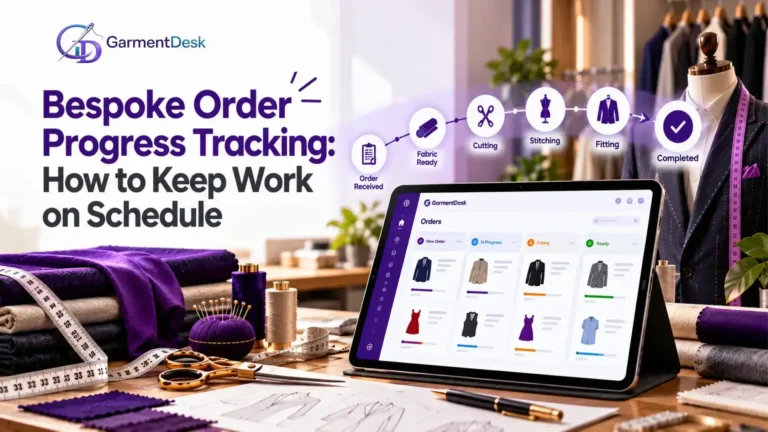
Order Received → Measurement → Cutting → Stitching → Fitting → Alteration → Quality Check → Ready → Delivered
Not every garment needs the same workflow, but each tailor shop should define clear stages that match its actual process.
This makes it easier to identify delayed orders and determine which jobs require immediate attention.
4. Give Every Order a Unique Reference
When several customers have similar garments or the same delivery date, identifying an order only by the customer’s name can confuse.
Assigning a unique order number provides a simple way to identify each job.
For example:
Order #GD-1048
The order record can then contain the customer’s measurements, garment details, fabric information, price, payment status, fitting schedule, and delivery date.
This is particularly useful when a tailor is handling many orders at the same time.
5. Record Fabric and Garment Details Carefully
Custom clothing orders often contain specific requirements that cannot be remembered reliably without documentation.
An order record should include relevant details such as:
- Garment type
- Fabric
- Color
- Style
- Collar design
- Sleeve style
- Pocket design
- Buttons
- Lining
- Stitching preferences
- Embroidery requirements
- Alteration instructions
- Customer notes
Clear documentation helps the production team understand exactly what the customer requested.
6. Set Fitting and Delivery Dates
A customer’s experience does not depend only on the final garment. Timely delivery also matters.
For each order, record:
- Order date
- Measurement date
- Fitting date
- Alteration date
- Expected completion date
- Final delivery date
A proper garment order management process allows the tailor to see upcoming deadlines and plan production accordingly.
This can also help prevent several urgent orders from reaching the same deadline without enough production capacity.
7. Track Order Status in One Place
When order information is spread between notebooks, WhatsApp messages, spreadsheets, and memory, finding the latest information takes more time.
A centralized tailor shop management software system can keep customer and order information together.
For example, a tailor should be able to quickly see:
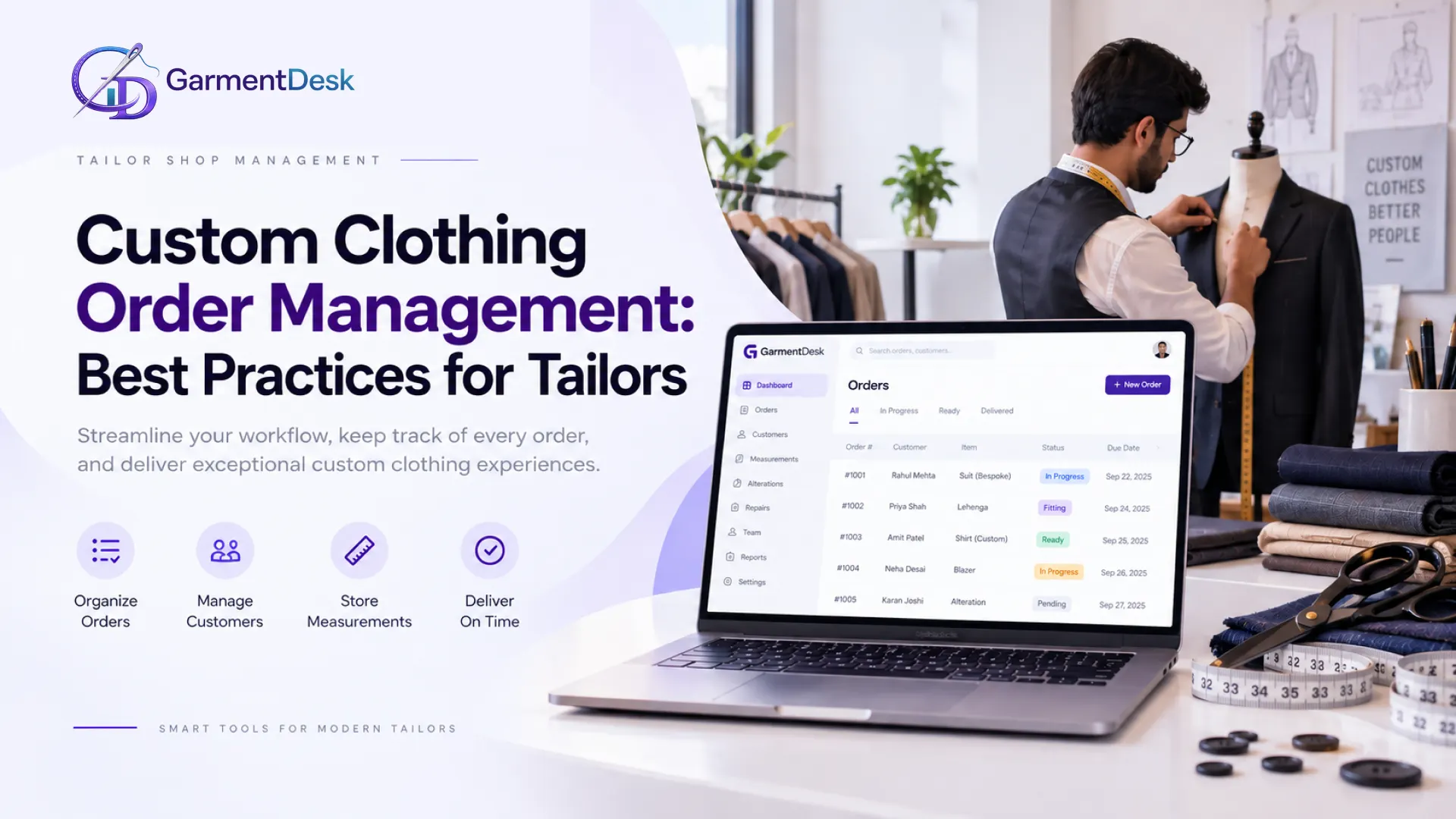
| Order Information | Example |
|---|---|
| Customer | Rahul Patel |
| Garment | Custom Suit |
| Measurements | Saved digitally |
| Order Status | Fitting |
| Payment | 50% Paid |
| Delivery Date | 28 September |
| Alteration | Sleeve adjustment |
Having this information available in one place reduces unnecessary searching and repeated communication.
8. Track Payments Along With Orders
Payment information should be connected to the relevant order.
For every custom garment, record:
- Total order value
- Advance payment
- Remaining balance
- Payment date
- Payment method
- Payment status
This helps avoid situations where a completed garment is ready for collection, but the payment record is unclear.
It also makes it easier to review outstanding balances across the business.
9. Manage Alterations as Part of the Order
Alterations are a normal part of custom tailoring. They should not be treated as separate information that can easily get lost.
When an alteration is requested, record exactly what needs to change.
For example:
Reduce sleeve length by 1 inch and adjust the waist.
The alteration should remain connected to the original order so that the tailor and staff can refer to the customer’s original requirements.
10. Keep Customers Updated
Customers often contact the tailor simply to ask:
“Is my order ready?”
Regular updates can reduce these repeated inquiries.
Depending on the shop’s workflow, customers can be informed when:
- The order is confirmed
- Measurements are completed
- Production begins
- The garment is ready for fitting
- Alterations are completed
- The garment is ready for pickup
- The order has been delivered
A clear communication process can make the ordering experience easier for both the customer and the tailoring team.
11. Use Previous Orders for Repeat Customers
Repeat customers are valuable because their basic information may already be available.
Instead of creating a completely new customer record each time, keep previous order information organized.
A tailor can then review:
- Previous measurements
- Earlier garment designs
- Fabric choices
- Alteration history
- Previous prices
- Customer preferences
This can make repeat orders faster to process while still allowing measurements and requirements to be updated when necessary.
12. Reduce Dependence on Manual Records
Notebooks and spreadsheets can work for a small number of orders, but managing growing order volumes manually can become difficult.
Common problems include:
- Lost measurement records
- Incorrect order status
- Missed delivery dates
- Duplicate customer records
- Unclear payment balances
- Difficulty finding old orders
- Limited visibility into workshop workload
This is where order tracking software for tailors can help organize the information in a more structured way.
13. Use Tailor Shop Software to Connect the Workflow
Tailor shop software can bring different parts of the order process together instead of requiring staff to maintain separate records.
A suitable system may help manage:
- Customer profiles
- Measurements
- Custom orders
- Production stages
- Fittings
- Alterations
- Invoices
- Payments
- Delivery dates
- Customer communication
- Business reports
For a growing tailoring business, having these functions connected can make daily order management easier to control.
14. Review Delayed and Pending Orders Regularly
Order management does not stop after an order is entered into the system.
Tailors should regularly review:
- Orders approaching their delivery date
- Orders waiting for measurements
- Orders waiting for fabric
- Garments waiting for fitting
- Pending alterations
- Completed orders awaiting pickup
- Unpaid balances
A daily or weekly review can help identify problems before they affect delivery.
15. Choose a System That Matches Your Tailoring Workflow
Every tailoring business operates differently. A small bespoke tailor, a bridal shop, and a larger tailoring workshop may have different requirements.
Before choosing custom clothing order management software, consider whether it supports your actual workflow.
Important areas to consider include:
- Customer and measurement management
- Order tracking
- Production stages
- Appointment management
- Invoicing
- Payment tracking
- Alteration management
- Reports
- Multiple staff members
- Easy access to customer records
The system should make the existing workflow easier to manage rather than adding unnecessary complexity.
How GarmentDesk Helps Tailors Manage Custom Orders
GarmentDesk is designed to help tailoring businesses organize their customer, order, measurement, production, and payment information in one system.
Instead of relying on separate notebooks and spreadsheets, tailor shops can use GarmentDesk to manage their workflow digitally.
It can help businesses manage areas such as:
- Customer records
- Digital measurements
- Custom clothing orders
- Order tracking
- Tailoring production workflows
- Invoicing
- Payments
- Customer relationships
- Business reports
For businesses handling a growing number of custom garments, having a structured system can make it easier to keep track of what has been ordered, what is currently being produced, and what still needs attention.
Final Thoughts
Good custom clothing order management is about keeping every important detail connected—from customer measurements and garment specifications to fittings, payments, alterations, and delivery.
Tailors can start with simple practices such as assigning order numbers, maintaining accurate measurements, setting clear delivery dates, recording alteration requests, and reviewing pending orders regularly.
As the business grows, tailor shop management software can provide a more organized way to manage these processes and reduce dependence on manual records.
The right approach allows tailors to spend less time searching for order information and more time focusing on producing well-fitted garments and serving their customers.