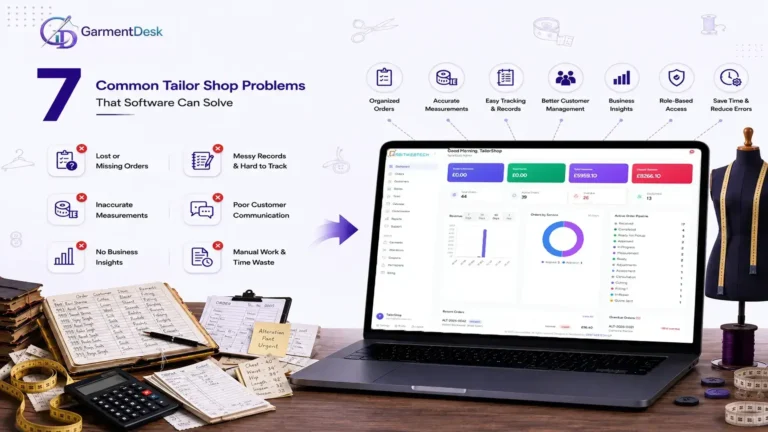
Managing bespoke orders is different from handling standard retail products. Every customer may have different measurements, fabric choices, design requirements, fitting needs, alterations, and deadlines. When you handle several orders at once, keeping track of every stage can become difficult.
Bespoke Order Progress Tracking: How to Keep Work on Schedule is about creating a clear process for every order, from the first customer consultation through measurements, production, fittings, alterations, and final collection.
A structured approach helps tailor shops know what needs to be done, who is responsible, and what happens next.
Why Bespoke Orders Can Be Difficult to Track
A bespoke garment usually passes through several stages before it is ready. A typical order may include:
- Customer consultation
- Style and fabric selection
- Taking and recording measurements
- Creating the garment pattern
- Cutting fabric
- Sewing and assembly
- First fitting
- Required alterations
- Final fitting
- Quality checking
- Customer collection
The problem starts when these stages are tracked through notebooks, loose papers, spreadsheets, or conversations between staff.
One missed measurement, delayed alteration, or forgotten fitting can affect the entire schedule.
This is why tailoring order tracking needs to be organised around the actual workflow of the shop.
Create a Clear Workflow for Every Order
The first step is to divide each bespoke order into clear stages.
Instead of simply marking an order as “in progress,” record its current position in the workflow.
For example:
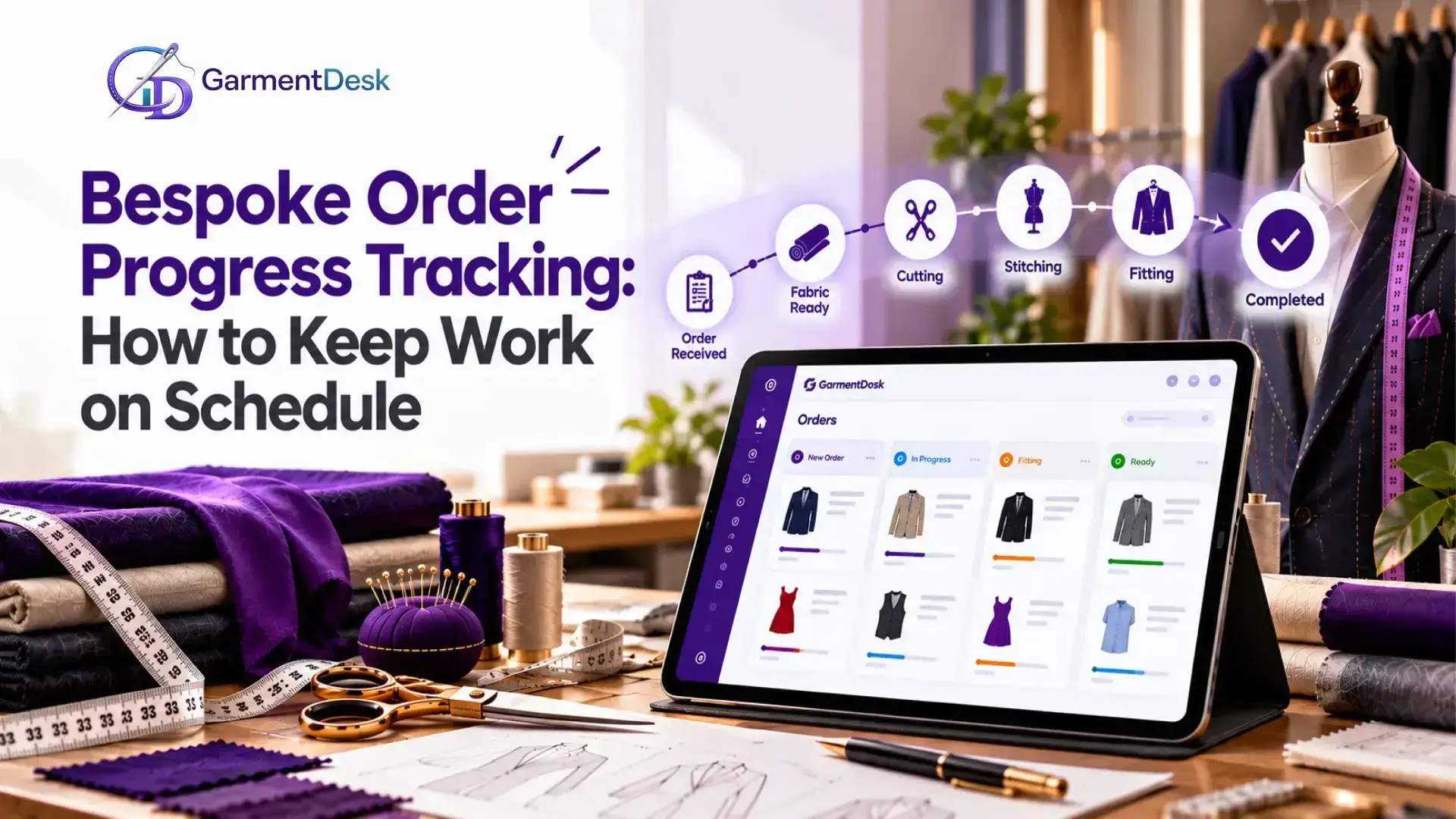
New Order → Measurements → Cutting → Production → Fitting → Alterations → Final Check → Ready
This gives the team a simple view of where each garment currently stands.
A clear custom garment workflow also makes it easier to identify delays before they affect the promised completion date.
Record Accurate Measurements and Order Details
Measurements are one of the most important parts of a bespoke order. If information is difficult to find or has been recorded incorrectly, production can be delayed, and rework may be required.
For each customer, keep relevant information together, including:
- Customer measurements
- Garment type
- Fabric details
- Colour and design preferences
- Special instructions
- Fitting requirements
- Alteration notes
- Promised completion date
- Order status
Keeping these details connected to the order reduces the need to search through different notebooks, files, or messages.
Digital measurement records can also make previous customer information easier to access when the customer places another order.
Break Large Orders Into Manageable Tasks
A bespoke order may look like one job to the customer, but several tasks are involved behind the scenes.
For example:
Bespoke Suit Order
- Confirm measurements
- Confirm fabric
- Prepare pattern
- Cut fabric
- Start stitching
- Complete first fitting
- Record alterations
- Make adjustments
- Complete final fitting
- Perform quality check
- Mark order ready
This type of tailor shop task management makes responsibilities easier to understand.
Staff can focus on the next required task rather than trying to remember everything that needs to be completed.
Set Deadlines for Each Stage
A final delivery or collection date is useful, but it may not be enough.
If an order is due in two weeks, the team should also know when measurements, cutting, production, fittings, and alterations need to be completed.
Breaking the order into smaller deadlines helps identify potential problems earlier.
For example:
| Stage | Target |
|---|---|
| Measurements | Day 1 |
| Pattern & Cutting | Day 3 |
| Initial Production | Day 7 |
| First Fitting | Day 9 |
| Alterations | Day 11 |
| Final Check | Day 13 |
| Customer Collection | Day 14 |
The exact schedule will depend on the type of garment and the workload of the shop, but the principle remains the same: track progress throughout the order instead of checking only at the end.
Make Delayed Orders Easy to Identify
Not every delay is avoidable. A fabric may arrive late, a customer may need to reschedule a fitting, or additional alterations may be required.
What matters is identifying the delay quickly.
An order tracking system for tailor shops can make overdue or delayed work easier to identify. Instead of checking every order manually, the team can focus attention on orders that need action.
This is particularly useful when a shop has many active bespoke orders at the same time.
Keep Fitting and Alteration Notes With the Order
Fittings are often where additional work is identified.
A customer may request:
- Sleeve adjustments
- Trouser length changes
- Waist adjustments
- Shoulder changes
- Garment reshaping
- Different button placement
- Other design or fit changes
These instructions should be recorded clearly and connected to the correct order.
Keeping alteration information with the original order helps the production team understand exactly what needs to be changed.
It can also reduce repeated questions between the tailor, fitting staff, and customer.
Give Customers Clear Order Updates
Customers naturally want to know when their garment will be ready.
Instead of asking staff to search for an order every time a customer calls or messages, maintain a clear current status.
Useful statuses could include:
- Order Confirmed
- Measurements Completed
- In Production
- Fitting Required
- Alteration in Progress
- Final Check
- Ready for Collection
Clear statuses make customer communication easier and help staff provide consistent information.
Use Digital Order Tracking Instead of Relying Only on Paper
Paper records can work for a small number of orders, but they become harder to manage as the business grows.
A digital tailoring management software system can bring customer information, measurements, order details, tasks, and progress information into one place.
Instead of searching through multiple records, staff can check the order and see what has already been completed and what remains.
This can be particularly useful for shops managing multiple customers, garments, fittings, and deadlines simultaneously.
Monitor Workload Across the Shop
Order progress tracking is not only about individual orders. It can also help shop owners understand the overall workload.
For example, you may discover that:
- Too many orders are waiting for cutting
- Fittings are creating a bottleneck
- Alterations are taking longer than expected
- Certain tasks are being assigned to the same staff member
- Orders are reaching production too close to their promised dates
These patterns can help you adjust scheduling before delays become a regular problem.
Keep the Process Simple for Staff
A tracking system should make work easier, not create additional administration.
Staff should be able to quickly answer basic questions:
What is this order?
What has already been completed?
What needs to happen next?
Who is handling the task?
When does it need to be finished?
If the information is easy to find and update, the team is more likely to keep order statuses accurate.
How GarmentDesk Can Help With Bespoke Order Tracking
GarmentDesk is designed for tailoring businesses that need a more organised way to manage their daily operations.
The platform brings areas such as customer records, measurements, orders, tasks, invoicing, and order progress into a connected system.
For bespoke businesses, this can help the team keep track of individual orders without relying entirely on notebooks, spreadsheets, or separate records.
With a clearer custom garment workflow, staff can follow each order through its required stages and keep important customer and garment information connected to the order.
Final Thoughts
Bespoke work requires attention to detail, but managing that detail does not have to mean relying on memory or scattered records.
A clear bespoke order progress tracking process can help tailor shops organise production stages, monitor deadlines, record fitting changes, manage alterations, and keep customers informed.
The goal is simple: know where every order stands, know what needs to happen next, and identify potential delays early.
For growing tailoring businesses, moving from paper-based tracking to a dedicated tailoring management software system can provide a more consistent way to manage orders from the first measurement through to completion.