Taking accurate measurements is one of the most important parts of tailoring. A small mistake in a measurement can affect the fit, lead to alterations, increase fabric waste, and create extra work for both the tailor and the customer.
For many tailoring businesses, measurements are still recorded in notebooks, paper forms, or spreadsheets. While these methods can work for a small number of orders, they become harder to manage as the customer base grows.
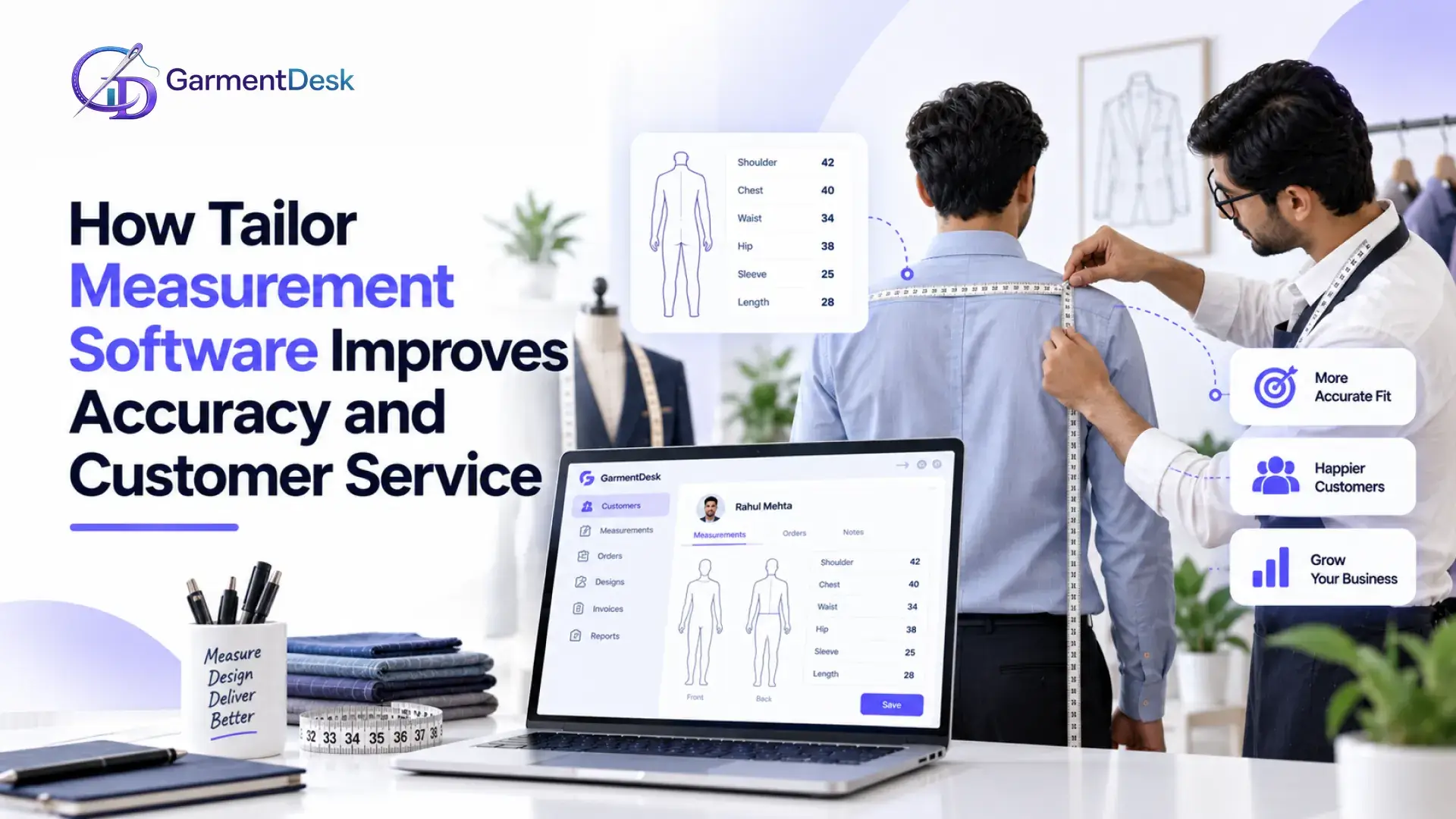
Tailor measurement software provides a more organized way to record, manage, and use customer measurements. Instead of relying on handwritten notes or scattered records, tailors can keep measurements connected to customer and order information.
Why Accurate Measurements Matter in Tailoring
Every customer has different body measurements, fitting preferences, and requirements. Keeping these details accurate is essential when creating made-to-measure garments.
Incorrect or missing measurements can result in:
- Poor garment fit
- Additional alteration work
- Delayed order completion
- Fabric and material waste
- Repeated customer visits
- Increased workload for tailoring staff
- Customer dissatisfaction
A reliable measurement process helps reduce these problems before production begins.
What Is Tailor Measurement Software?
Tailor measurement software is a digital system that helps tailoring businesses record and manage customer measurements.
Depending on the software, a tailor may be able to store details such as:
- Chest and waist measurements
- Shoulder width
- Sleeve length
- Trouser length
- Neck measurement
- Hip measurement
- Jacket measurements
- Customer-specific fitting notes
- Previous measurement records
The main benefit is that these details can be kept in one place and associated with the correct customer and order.
This makes it easier to find the information when a returning customer places another order.
How Tailor Measurement Software Improves Measurement Accuracy
1. Reduces Problems With Handwritten Records
Handwritten measurements can be difficult to read, especially when staff members use different formats or abbreviations.
A digital measurement system provides clearly labelled fields, making it easier to enter and review information.
Instead of trying to understand a handwritten note months later, staff can access structured measurement records.
2. Keeps Measurements Connected to the Right Customer
When measurements are stored alongside customer information, there is less risk of using the wrong record for an order.
This is particularly useful for tailoring businesses handling many customers and multiple orders at the same time.
A digital customer profile can contain the customer’s measurement history, preferences, and relevant order information.
3. Makes Previous Measurements Easy to Find
Returning customers often want similar garments or may need only minor measurement changes.
With tailor measurement software, staff can quickly check previous records instead of taking measurements from the beginning or searching through paper files.
This can make repeat orders more convenient for both the tailor and customer.
4. Helps Standardize the Measurement Process
Different staff members may record measurements differently when using paper records.
Digital measurement forms can provide a consistent structure for entering information. This helps staff follow the same measurement process and reduces confusion between different measurement terms or fields.
5. Reduces Data Entry Mistakes
A structured digital system can make it easier to identify missing information before an order moves forward.
For example, if an important measurement has not been entered, staff can check the record before cutting or production begins.
This simple step can help prevent avoidable fitting problems later.
How Digital Measurements Improve Customer Service
Accurate measurements are not only a production issue. They also affect the customer’s overall experience.
Faster Service for Returning Customers
When a customer’s previous measurements are already stored, staff can retrieve them during a new order.
This can reduce the time spent searching through old records and make repeat visits more efficient.
Fewer Repeated Measurements
If a customer has an existing measurement profile, the tailor can review the stored information and determine whether new measurements are required.
This is especially helpful for regular customers who frequently order alterations or custom garments.
Better Order Communication
When customer measurements are linked with order records, staff have access to the information needed to understand each order.
This can make communication easier when customers ask about an order, fitting requirements, or a previous garment.
A More Organized Customer Experience
Customers notice when a business can quickly locate their information and understand their previous requirements.
An organized measurement process can make a tailoring shop feel more efficient without making the customer repeat the same information unnecessarily.
Tailor Measurement Software vs. Paper Records
Paper records are familiar and inexpensive, but they can become difficult to manage as the business grows.
| Paper Measurement Records | Digital Measurement Records |
|---|---|
| Can be difficult to search | Easy to search and retrieve |
| Handwriting may be unclear | Structured digital fields |
| Physical storage is required | Records are stored digitally |
| Records can be misplaced | Customer profiles can organize records |
| Updating information can be messy | Measurements can be updated easily |
| Harder to connect with orders | Can be linked with customer and order information |
The goal is not simply to replace paper with a computer. The real advantage is having customer measurements organized alongside the information needed to manage the order.
How Measurement Software Fits Into a Tailoring Workflow
A useful measurement system can become part of the normal order process.
Step 1: Create or Select the Customer
Staff can create a customer profile or open an existing one.
Step 2: Record Measurements
The customer’s current measurements can be entered into the appropriate fields along with any fitting notes.
Step 3: Create the Order
The measurements can be associated with the customer’s tailoring order.
Step 4: Review Before Production
Staff can check the recorded measurements and order details before the garment moves into production.
Step 5: Update When Required
If measurements change or a fitting reveals an adjustment, the customer’s record can be updated for future orders.
This creates a consistent process from measurement to completed garment.
Why Measurement History Is Useful for Repeat Customers
Customer measurements can change over time. A measurement record should therefore be treated as useful historical information rather than something that is never changed.
For returning customers, staff can review previous measurements and update them when necessary.
This is useful for businesses that handle:
- Regular alteration customers
- Repeat bespoke orders
- Wedding and formalwear
- Uniform orders
- Custom suits
- Made-to-measure clothing
Having a clear history can help staff understand what has changed between orders.
Using Tailor Measurement Software With Order Management
Measurements are most useful when they are part of the wider tailoring workflow.
For example, a customer may have several orders with different garment requirements. Keeping measurements separate from order information can create unnecessary work.
Tailoring order management software can help businesses connect customer profiles, measurements, orders, fittings, payments, and other details in one system.
This gives staff a clearer view of what needs to be completed for each customer.
Choosing the Right Tailor Measurement Software
Before choosing a system, consider how it fits your existing workflow.
Look for features such as:
Customer Measurement Profiles
The software should make it simple to create, update, and retrieve measurement records.
Measurement History
Being able to review previous measurements can be valuable for returning customers.
Order Integration
Measurements should ideally work alongside customer and order information rather than being stored separately.
Easy Data Entry
The interface should be straightforward enough for staff to use during normal customer interactions.
Access to Records
If your tailoring business operates across different devices or locations, consider whether staff can access customer records when needed.
Support for Alteration and Bespoke Orders
If your business handles both alterations and bespoke garments, the measurement system should fit both types of work.
How GarmentDesk Can Help
GarmentDesk helps tailoring businesses manage customer and order information digitally.
Instead of keeping measurements, customer details, and order information in separate paper records, businesses can use a more organized system for managing their tailoring workflow.
For a growing tailor shop, this makes it easier to track customer requirements, retrieve past information, and manage orders from measurement through completion.
Final Thoughts
Accurate measurements are fundamental to good tailoring. However, accuracy also depends on how those measurements are recorded, stored, reviewed, and used.
Tailor measurement software can help reduce problems associated with handwritten records, make customer information easier to retrieve, and create a more consistent measurement process.
When digital measurements are connected with tailoring management software, tailoring order management software, and customer records, they can become part of a smoother day-to-day workflow.
For tailoring businesses looking to reduce manual record-keeping while providing a more organized customer experience, moving from paper measurements to a digital system can be a practical step.