Managing customer follow-ups is essential to running a successful tailoring business. Customers may need updates about measurements, fittings, alterations, order progress, pending payments, or collection dates. When you handle these follow-ups manually, it is easy to miss an important call or forget to contact a customer on time.
A simple and organised customer follow-up system for tailoring businesses can help you keep track of every customer and order without relying on notebooks, spreadsheets, or memory.
GarmentDesk helps tailor shops manage customer information, orders, measurements, payments, notifications, and follow-ups from one place.
Why Customer Follow-Ups Matter in a Tailoring Business
A tailoring order usually involves several steps. A customer may place an order today but return later for a fitting, alteration, approval, or collection.
Without proper follow-up, common problems can occur:
- Customers do not receive timely order updates.
- Fitting appointments are forgotten.
- Customers have to call repeatedly for updates.
- Pending payments are overlooked.
- Completed garments remain uncollected.
- Staff spend time searching through old records.
- Important customer requests can be missed.
A structured tailor shop customer management system makes these tasks easier by keeping customer and order information together.
How to Manage Customer Follow-Ups in a Tailoring Business
1. Keep Complete Customer Records
The first step is to maintain accurate customer records. Instead of keeping customer details across different notebooks or spreadsheets, store them in one organised system.
Useful information can include:
- Customer name and contact details
- Measurements
- Previous orders
- Alteration requirements
- Fitting information
- Payment history
- Order status
- Customer notes
- Previous preferences
Having this information available makes future follow-ups much easier.
For example, when a returning customer places another order, staff can quickly review their previous measurements and order history instead of asking for the same information again.
2. Track Every Order by Status
Customer follow-ups become easier when you know exactly where each order stands.
A tailoring order may move through stages such as:
New Order → Cutting → Stitching → Fitting → Alteration → Ready → Collected
An order management system for tailor shops can help staff identify which customers need attention at each stage.
For example, if an order is waiting for a fitting, the staff can identify it and contact the customer rather than waiting for the customer to call.
3. Set Reminders for Important Follow-Ups
Not every follow-up needs to happen immediately. Some need to happen on a specific date.
Examples include:
- Fitting reminders
- Measurement appointments
- Collection reminders
- Payment reminders
- Alteration follow-ups
- Order completion notifications
- Customer approval requests
A tailor shop reminder system can help staff keep these activities organised.
Instead of writing reminders on paper, you can associate follow-up activities with the relevant customer or order.
4. Send Customers Timely Notifications
Customers appreciate knowing what is happening with their orders.
You can send notifications when:
- An order is received
- An order is being worked on
- A fitting is required
- An alteration is completed
- An order is ready for collection
- A payment is due
Automated customer notifications can reduce the amount of repetitive communication your staff need to handle manually.
5. Follow Up on Pending Payments
Payments are another important reason to contact customers.
A tailoring business may have:
- Deposits
- Partial payments
- Outstanding balances
- Final payments
- Payments linked to alterations or additional work
Keeping payment information connected to the customer’s order makes it easier to identify outstanding balances.
A tailoring business payment management system can help staff check payment status before contacting customers.
6. Manage Fitting and Alteration Follow-Ups
Fittings and alterations often require multiple customer interactions.
For example, a bridal customer may need:
- Initial measurements
- First fitting
- Required alterations
- Second fitting
- Final adjustments
- Final collection
Without proper tracking, staff can lose track of the next step.
GarmentDesk helps tailor shops organise the workflow so staff can see what needs to happen next for each order.
Use Customer History for Better Follow-Ups
Customer follow-ups should not be limited to current orders.
A customer’s previous order history can provide useful information for future work. Staff can review previous measurements, garment types, alterations, and notes before speaking with the customer.
This can make conversations more useful and reduce repeated questions.
For example:
“Your previous measurements are saved, but we can update them if anything has changed.”
This is more convenient for both the customer and the tailor.
Reduce Manual Follow-Up Work
Many tailoring businesses still use a combination of notebooks, phone calls, spreadsheets, and messaging apps to manage customer communication.
This can work for a small number of orders, but it becomes difficult as the business grows.
A tailoring software solution can bring customer records, orders, payments, reminders, and notifications into one system.
GarmentDesk is designed specifically for tailoring businesses, helping shops manage daily operations without maintaining multiple disconnected records.
Manage Follow-Ups Across Multiple Staff Members
Follow-ups can become complicated when several employees work on the same orders.
For example, one employee may take the order, another may handle stitching, and someone else may manage customer communication.
A central system helps staff access the same order information and understand its current status.
This reduces the chance of two employees contacting the same customer or assuming someone else has already completed a follow-up.
Keep Completed Orders Organised
Follow-up does not always end when an order is completed.
Customers may return for:
- Additional alterations
- Repairs
- New garments
- Repeat orders
- Size adjustments
- Questions about previous work
Keeping historical customer records makes these future interactions easier.
Instead of starting from the beginning, staff can review the customer’s previous information and continue from there.
How GarmentDesk Helps With Customer Follow-Ups
GarmentDesk provides tools designed around the everyday needs of tailor shops.
With GarmentDesk, businesses can manage:
- Customer profiles and records
- Measurements
- Tailoring orders
- Alteration workflows
- Bespoke orders
- Invoices and payments
- Customer notifications
- Order status
- Staff roles and permissions
- Reports and business information
This gives your team a central place to manage customer and order information.
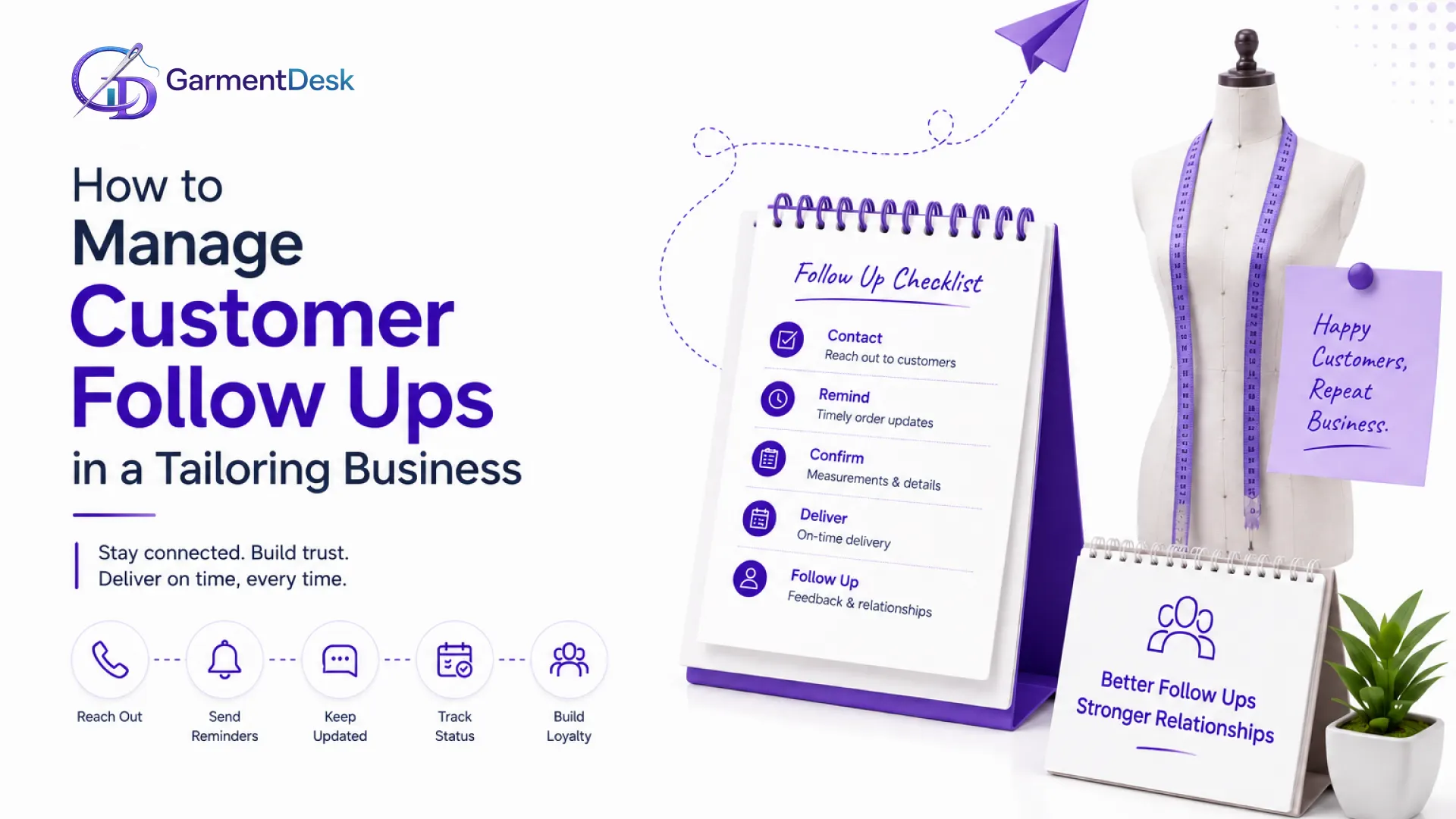
A Simple Follow-Up Process for Tailor Shops
A practical process could look like this:
Step 1: Create the customer profile
Step 2: Add measurements and order details
Step 3: Set the expected completion or fitting date
Step 4: Track the order through each production stage
Step 5: Follow up when a fitting or customer response is required
Step 6: Notify the customer when the order is ready
Step 7: Record the final payment and collection
Step 8: Keep the order history for future reference
This approach makes customer follow-ups part of the normal order workflow rather than a separate task that staff has to remember.
Make Customer Follow-Ups Easier With GarmentDesk
Managing customer follow-ups manually can take time and lead to missed updates. A structured system helps your team know who needs to be contacted, why they need to be contacted, and what needs to happen next.
GarmentDesk brings customer management, order tracking, payments, measurements, notifications, and tailoring workflows together in one platform.
If you want a more organised way to manage your tailoring business, book a demo with GarmentDesk and see how it can fit into your daily workflow.