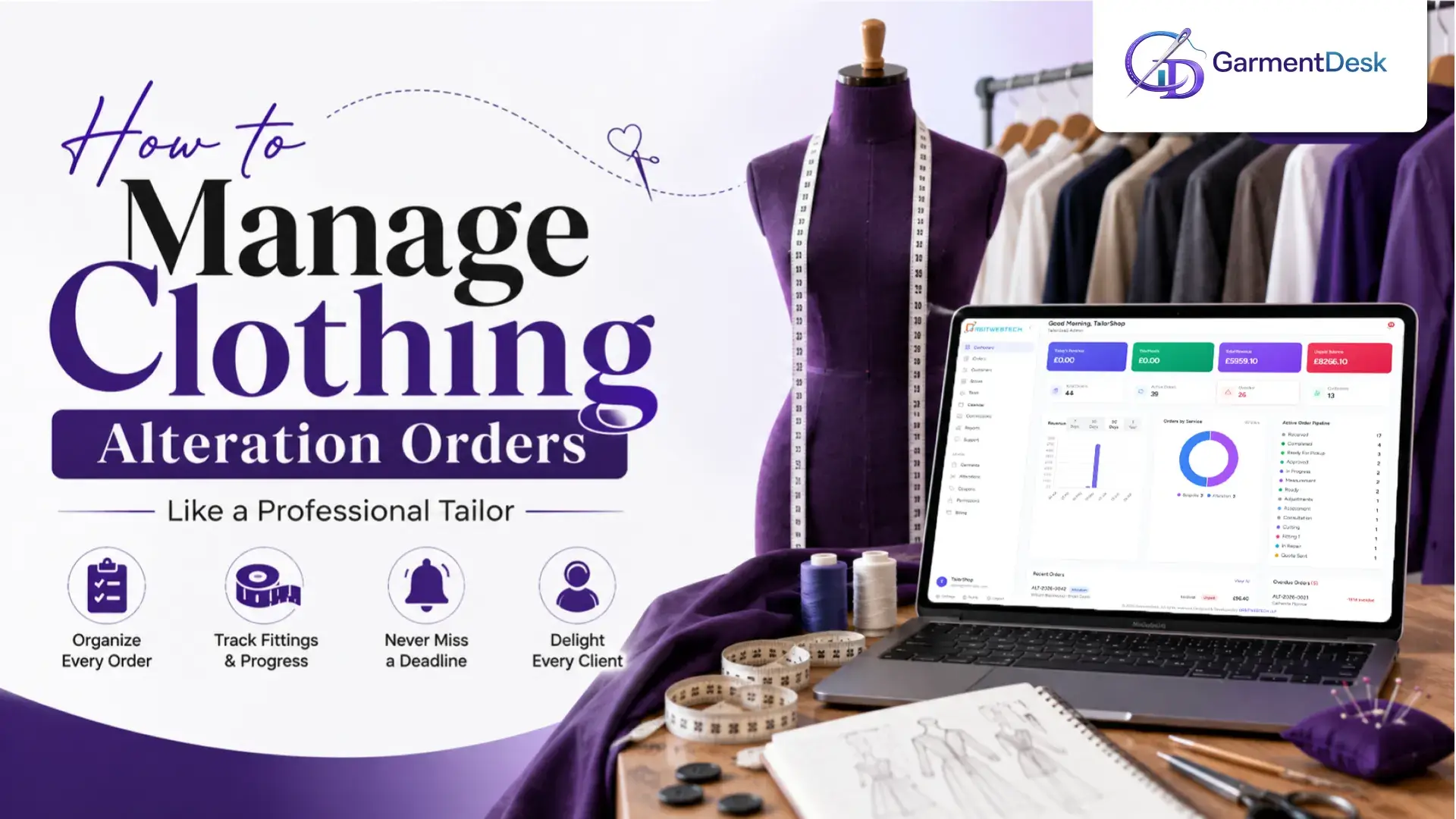
Managing clothing alteration orders involves much more than taking measurements and making adjustments. A professional tailor needs to keep track of customer details, garment requirements, measurements, fitting dates, alteration instructions, payments, and collection deadlines.
When several garments are being worked on at the same time, even a small mistake can cause delays or require an alteration to be repeated. A misplaced measurement sheet, unclear alteration instructions, or missed collection date can quickly turn into an unhappy customer.
A clear clothing alteration order management process helps prevent these problems. Whether you run a small alteration shop or handle a growing tailoring business, having an organised system makes it easier to know what needs to be done, when it needs to be done, and who each garment belongs to.
If you are looking for ways to organise your tailoring business more efficiently, GarmentDesk can help bring important customer and order information together in one place.
Why Clothing Alteration Order Management Matters
Every alteration order has several moving parts. A customer may leave one or more garments, request multiple changes, attend a fitting, make additional requests, and return later to collect the finished items.
Without a consistent process, information can easily get lost.
Common problems include:
- Incorrect customer measurements
- Unclear alteration instructions
- Garments being difficult to identify
- Missed fitting appointments
- Delayed orders
- Forgotten customer requests
- Difficulty checking an order’s progress
- Payment information being overlooked
- Customers calling to ask whether their garment is ready
Good tailor order management reduces these problems by giving every order a clear process from intake to collection.
1. Record Customer Details Before Accepting the Order
Start every alteration order by recording the customer’s basic information.
Depending on your business, this may include:
- Customer name
- Phone number
- Email address
- Order date
- Preferred contact method
- Fitting date
- Collection date
- Special instructions
Accurate customer information makes future communication easier. It also helps when a customer returns months later for another alteration.
Instead of creating a completely new record every time, you can keep a history of previous work and refer back to it when needed.
For businesses handling many repeat customers, organised alteration customer management can save considerable time.
2. Create a Clear Record for Every Garment
Customer information alone is not enough. Each garment should have its own alteration details.
For example, an order might include:
Customer: Sarah
Garment: Black trousers
Alteration: Shorten legs by 2 inches
Waist: Reduce by 1 inch
Fitting: 15 August
Collection: 20 August
This level of detail reduces confusion when several garments look similar.
If a customer leaves a jacket, trousers, dress, and shirt at the same time, each item should be clearly connected to the correct alteration instructions.
A consistent clothing alteration tracking system makes this much easier.
3. Take and Store Accurate Measurements
Measurements are one of the most important parts of an alteration order.
Depending on the garment, you may need measurements such as:
- Chest
- Waist
- Hip
- Shoulder
- Sleeve length
- Trouser length
- Inside leg
- Rise
- Jacket length
- Dress length
Do not rely on memory or loose pieces of paper. Measurements should be recorded immediately and connected to the correct customer and garment.
Good tailor measurement management also makes repeat work easier. When a regular customer returns, you can check previous measurements before taking new ones.
However, measurements should still be confirmed when necessary because body measurements and garment requirements can change.
4. Write Alteration Instructions Clearly
An alteration instruction should tell the person working on the garment exactly what needs to be changed.
Avoid vague notes such as:
“Make smaller.”
Instead, record specific instructions:
“Reduce waist by 1 inch and shorten sleeve by 1.5 inches.”
For complex garments, include additional details on where the alteration should be made.
Clear instructions are particularly important when the person taking the order is not the same person completing the alteration.
A professional tailor shop order tracking process ensures that the original customer request stays connected to the garment throughout the job.
5. Give Every Order a Clear Status
A simple order-status system can make a major difference when managing multiple jobs.
For example, you could use statuses such as:
- New Order
- Awaiting Fitting
- Ready for Alteration
- In Progress
- Ready for Fitting
- Completed
- Ready for Collection
- Collected
The exact stages will depend on your shop, but the important thing is consistency.
At any point, you should be able to answer:
What stage is this order currently in?
This is much easier when your business has a proper alteration order management process rather than relying on memory.
6. Keep Fittings and Collection Dates Visible
Dates are easy to overlook when a shop is busy.
An alteration may need to be completed before:
- A wedding
- A graduation
- A business event
- A holiday
- A party
- A special occasion
The customer’s deadline should therefore be recorded when the order is created.
For example:
Order due: 18 August
Fitting: 15 August
Collection: 18 August
This gives the tailor a clear timeline and makes it easier to prioritise work.
If a customer has an important event coming up, that information should also be included in the order notes.
7. Separate Urgent Orders From Normal Orders
Not every alteration has the same deadline.
A customer collecting a garment next week and another customer needing a dress tomorrow should not be treated as identical orders.
Consider identifying urgent jobs clearly.
For example:
- Standard
- Priority
- Urgent
This allows you to plan your workload without repeatedly checking every order manually.
However, avoid promising unrealistic turnaround times. A clear schedule is better than accepting more urgent work than your team can complete.
8. Keep Customers Updated
Customers generally want to know three things:
Has my garment been received?
Is the alteration complete?
When can I collect it?
You do not need to contact customers constantly. A simple update at the right stage can prevent unnecessary phone calls.
For example, you might notify a customer when:
- The order has been accepted
- A fitting is due
- The garment is ready
- The order is ready for collection
Keeping communication organised is an important part of alteration business management.
9. Track Payments Alongside Orders
Payment information should not be separated from the order record.
Depending on your business model, you may need to record:
- Total price
- Deposit
- Amount paid
- Outstanding balance
- Payment date
- Payment method
For example:
Alteration total: £45
Deposit paid: £20
Balance: £25
Having this information available when the customer collects the garment helps avoid confusion.
10. Use Labels to Identify Garments
A good alteration process also needs a reliable way to identify physical garments.
A useful garment label can include information such as:
- Order number
- Customer name
- Garment type
- Due date
- Fitting date
This is particularly important when the shop has dozens or hundreds of garments at different stages.
The physical garment and digital or written order record should always be easy to match.
11. Avoid Managing Orders From Loose Paper Notes
Paper can work for a very small number of orders, but it becomes difficult to manage as the business grows.
Problems can occur when:
- Notes are misplaced
- Handwriting is unclear
- Measurements are recorded on different sheets
- Customer information is difficult to find
- Old records cannot be located quickly
- Staff members cannot easily access the same information
Digital tailor order management can provide a more organised way to store customer, measurement, order, and payment information.
For tailoring businesses that want to move away from paper-based processes, GarmentDesk provides tools designed around tailoring and alteration business workflows.
12. Review Orders Before Starting the Work
Before beginning an alteration, take a moment to check the order.
Confirm:
- Correct customer
- Correct garment
- Measurements
- Alteration instructions
- Fitting requirements
- Due date
- Special requests
This quick check can prevent expensive mistakes.
For example, if a customer has requested the same type of alteration on two similar trousers, confirming the order before starting helps ensure the correct measurements are applied to the correct garment.
13. Check the Garment Before Marking or Altering It
Measurements and customer instructions are important, but the garment itself should also be inspected.
Check for:
- Existing damage
- Previous alterations
- Fabric condition
- Loose stitching
- Special construction
- Lining
- Decorative details
- Zips or buttons
- Fabric patterns
If there is existing damage or a potential issue, make a note before beginning the work.
This gives you a clear record of the garment’s condition when it arrived.
14. Perform a Final Quality Check
An order should not automatically be marked complete as soon as the sewing is finished.
Perform a final inspection.
Check:
- Requested measurements
- Stitching
- Hems
- Seams
- Buttons
- Zips
- Lining
- Overall appearance
- Any special instructions
For garments that require a fitting, confirm that the customer’s fitting requirements have been completed before moving the order to collection.
A simple final check can catch problems before the customer sees them.
15. Keep a History of Completed Orders
Completed orders contain useful information.
If a customer returns later, previous records can help you understand:
- What garment was altered
- What measurements were used
- What type of alteration was performed
- What the customer requested
- How much the previous work cost
A history of previous orders can make repeat visits easier and provide useful information for future work.
This is one reason a proper clothing alteration business should maintain organised customer records instead of treating every order as a completely separate job.
A Simple Workflow for Managing Alteration Orders
A professional alteration workflow does not have to be complicated.
A practical process can look like this:
Customer arrives → Customer details recorded → Garment inspected → Measurements taken → Alteration instructions recorded → Price confirmed → Due date assigned → Garment labelled → Alteration completed → Quality checked → Customer notified → Payment completed → Garment collected
The important part is making each step consistent.
When every order follows the same process, there is less room for important information to be missed.
How GarmentDesk Can Help With Alteration Order Management
Managing a growing alteration business manually can become difficult when customer records, measurements, orders, payments, and deadlines are spread across notebooks, spreadsheets, messages, and memory.
A dedicated system can help bring these details together.
GarmentDesk is designed for tailoring and alteration businesses that need a more organised way to manage their daily operations.
Instead of spending unnecessary time searching through paperwork or checking different records, your team can work from organised customer and order information.
This can be especially useful as the number of customers and garments increases.
Final Thoughts
Professional clothing alteration order management is mainly about consistency.
You need a reliable process for recording customer details, taking measurements, writing alteration instructions, tracking garments, managing deadlines, recording payments, and checking completed work.
The goal is not to make the process complicated. It is to make every order easy to understand from the moment it enters the shop until the customer collects the finished garment.
For a small alteration business, a clear system can prevent many common mistakes. For a growing tailoring shop, organised tailor order management can also help staff handle more orders without losing track of important details.
If your current process depends heavily on paper notes, spreadsheets, or memory, it may be worth moving to a system designed specifically for tailoring and alteration businesses. Explore GarmentDesk to see how it can support your day-to-day order management.