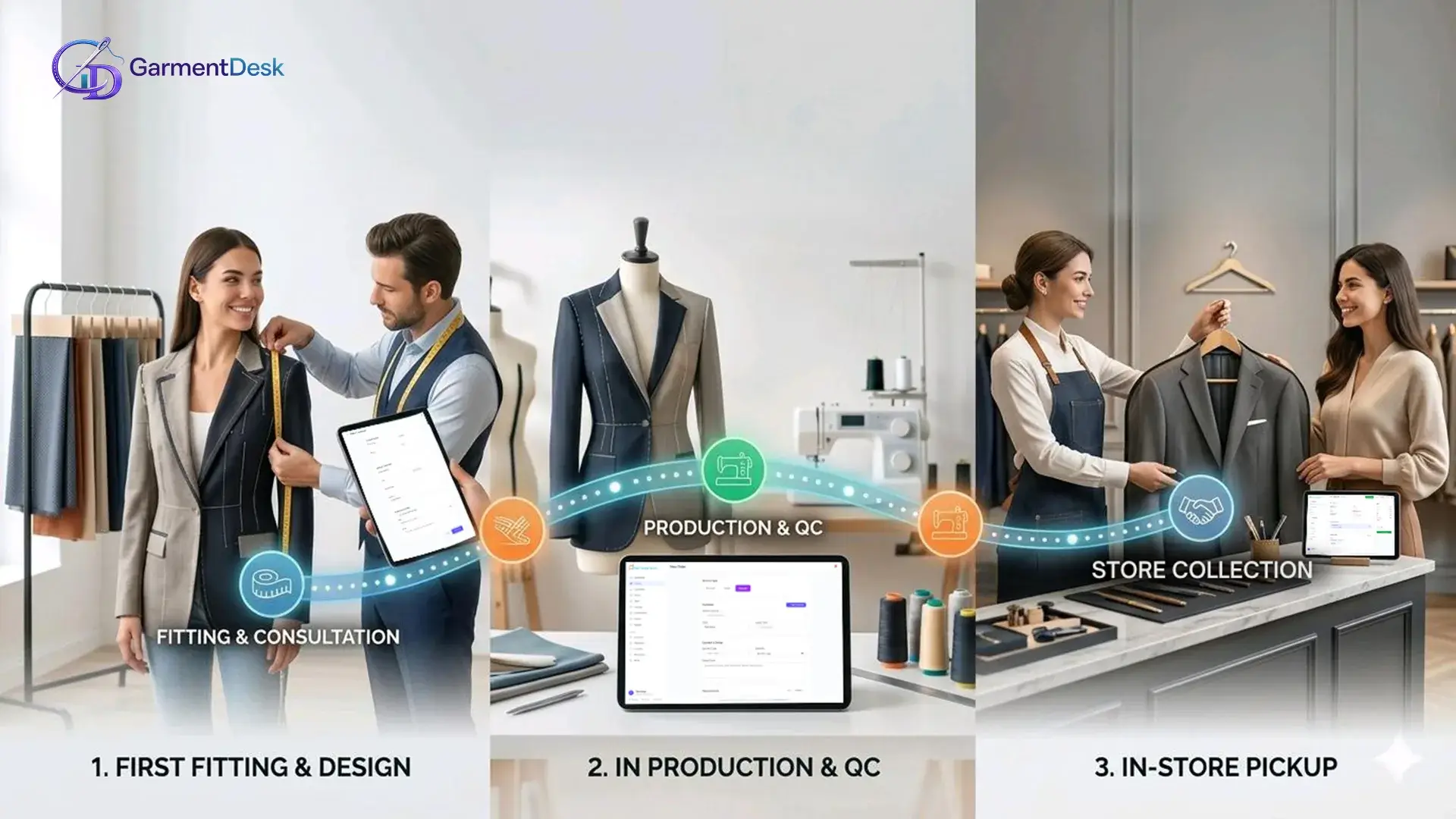
A single bespoke suit can move through eight to twelve production stages, three or more fittings, and several weeks of careful craftsmanship. One missed update, one forgotten measurement, or one lost note can damage years of customer trust in a single conversation.
- For most independent tailors and small ateliers, the real challenge is not the sewing, it is keeping every order visible, on schedule, and properly communicated.
- That is where a dedicated bespoke order tracking system becomes the difference between a stressed workshop and a smooth one.
- In this guide, we walk through the full bespoke journey from the first fitting to the final delivery, and show you exactly how a modern tracking system supports every stage.
Why Bespoke Orders Are Harder to Track Than Ready-Made
- A ready-to-wear sale ends at the checkout. A bespoke order, by contrast, only begins there.
- It involves a long chain of touchpoints consultation, measuring, fabric selection, cutting, basted fitting, forward fitting, final fitting, finishing, and delivery.
- Each stage produces its own notes, photos, and customer expectations.
- Lead times of four to ten weeks also mean that small mistakes have time to grow into big ones. A wrong sleeve note caught at the cutting stage costs minutes to fix, but the same mistake caught at delivery costs days.
- Lead times of four to ten weeks also mean that small mistakes have time to grow into big ones. A wrong sleeve note caught at the cutting stage costs minutes to fix, but the same mistake caught at delivery costs days.
The 7 Key Stages of a Bespoke Order Pipeline
Understanding the bespoke pipeline is the foundation of tracking it well. Most tailoring houses run some version of these seven stages.
Stage 1: Consultation and Style Brief
The client describes the occasion, style, lapel preference, lining choice, and budget. Record everything in a structured brief so nothing is lost in translation later.
Stage 2: Measurements and Pattern Drafting
Take and record every measurement, posture note, and pattern adjustment. These details must follow the order through every later stage, especially for repeat clients.
Stage 3: Fabric Selection and Costing
Confirm the fabric, lining, buttons, and trims. Lock the price and the deposit. Any change here ripples through the whole order, so it needs to be tracked clearly.
Stage 4: Cutting and Initial Stitching
The pattern is cut and the garment is loosely assembled for the first try-on. Cutters and stitchers need clear instructions and a single source of truth for measurements.
Stage 5: First (Basted) Fitting
The customer tries on the loosely stitched garment. Photos, notes, and chalk marks captured here drive every adjustment that follows.
Stage 6: Forward Fitting and Adjustments
The garment is brought closer to its final form. Any remaining adjustments to balance, fit, and drape are agreed and recorded.
Stage 7: Final Fitting, QA and Delivery
The garment is pressed, inspected, packed, and handed over. A clean record of approvals here protects you against any later disputes.
What a Bespoke Order Tracking System Should Do at Each Stage
A good bespoke order tracking system is more than a status list. It is a workspace that pulls the customer profile, the garment details, the stage status, and the team task list into one connected view. At a minimum, it should offer the following.
- A visual pipeline, often Kanban-style, so any team member can see at a glance which garment is at which stage.
- A customer profile that stores measurements, fabric choices, fitting photos, and past order history.
- Automated status notifications so customers receive timely updates without manual follow-up calls.
- Deadline triggers and reminders attached to each stage, with overdue items flagged automatically.
- Role-based access so the cutter, the tailor, the front desk, and the owner each see what is relevant to their job.
When these capabilities work together, the team stops chasing information and starts focusing on craftsmanship.
Manual Tracking vs. a Bespoke Tailoring Pipeline Management Tool
The clearest way to see the value of a dedicated tool is to compare it side by side with manual methods on everyday tasks.
| Task | Manual Method | With a Pipeline Tool |
| Updating customer on fitting date | Manual calls or WhatsApp messages | Automated email triggers |
| Finding old measurements | Search through paper files or notebooks | One-click customer profile lookup |
| Knowing which suit is at which stage | Ask the team and check sticky notes | Visual pipeline shows live status |
| Sending invoice and collecting balance | Handwritten bills, manual follow-ups | Built-in invoicing with payment tracking |
Across every row, the pattern is the same. A bespoke tailoring pipeline management tool removes the small bits of guesswork that quietly drain hours from a tailor’s week, while protecting the margins that make the business sustainable.
5 Features to Look For When Choosing the Right Software
Not every system marketed at tailors is built for true bespoke work. When evaluating options, look for these five features in particular.
- Visual bespoke pipeline: A drag-and-drop board that mirrors your real workshop stages, not a generic to-do list.
- Customer CRM with full history: Measurements, fabric notes, fitting photos, and past orders, all tied to the same customer record.
- Automated notifications: Built-in email messages triggered automatically when a stage changes.
- Multi-fitting scheduling: Calendar tools that handle multiple fittings per order and send reminders to both client and staff.
- Invoicing with deposit tracking: Clear visibility on deposits taken, balances owed, and payments collected, all linked to the order.
A Quick Workflow Example: Tracking One Suit from Day 1 to Delivery
- Day 1: Mr. Monroe orders a navy two-piece. The front desk creates his profile, records 18 measurements, attaches the fabric swatch, and books his first fitting. The system locks his price and sends an automated order confirmation.
- Day 10: The cutter pulls Mr. Monroe’s order, sees the full measurement set on the same screen, and moves the card from Cutting to First Fitting. An email goes out to confirm his fitting.
- Day 18: After the basted fitting, three adjustments are recorded against the order. The card moves to Forward Fitting. The customer receives an update that his suit is on track.
- Day 32: Final fitting is completed. QA marks the order Ready for Collection. The system emails the invoice and a pickup reminder. Mr. Monroe collects his suit, the balance is settled in two clicks, and his complete order history is now ready for his next visit.
Conclusion
Bespoke is, at heart, a relationship business. Customers do not just pay for fabric, they pay for the feeling that someone is looking after every detail on their behalf. The right bespoke order tracking system protects exactly that feeling. It keeps your team aligned, your customers informed, and your deadlines honoured, so your craft can stay the centre of attention. If you are still juggling notebooks, spreadsheets, and message threads, a dedicated bespoke pipeline management tool like GarmentDesk is one of the highest-leverage upgrades you can make this year.
Frequently Asked Questions
How long does a typical bespoke clothing order take from first fitting to final delivery?
A standard bespoke suit usually takes between four and ten weeks, depending on the complexity of the garment, the number of fittings required, and the workshop’s current order volume. Rush orders are possible but often add a premium. A bespoke order tracking system helps you give clients an accurate, real-time delivery estimate at every stage.
Can I really track bespoke orders online, or is paper still better?
Modern bespoke order tracking software is built specifically for tailoring workflows, so you get the structure of digital tracking without losing the craft. Measurements, fitting photos, fabric notes, and customer history all live in one profile, accessible from any device. Most tailors who switch report fewer mistakes and faster delivery times within the first month.
Do I need separate software for alterations and bespoke orders?
Not necessarily. A good tailoring management platform handles bespoke pipelines, alterations, and repairs in one system, with separate workflows for each service type. This keeps your team trained on one tool, your customer records unified, and your reporting consistent across every revenue stream.
Is a bespoke tailoring pipeline management tool worth it for a small one-person shop?
Yes, especially for solo tailors. The smaller the team, the harder it is to keep every order detail in your head while juggling fittings, sourcing, and customer calls. A dedicated tool acts like a silent assistant: it remembers deadlines, sends client updates, stores measurements, and keeps your invoicing tidy, freeing you to focus on the craft itself.