Managing custom garment orders involves more than taking measurements and recording a delivery date. A single order can include customer preferences, fabric details, measurements, design instructions, alterations, fittings, payments, and several production stages. Without a clear process, even experienced tailoring businesses can lose track of important details.
A custom garment workflow helps organize every step of an order, from the first customer consultation to the final handover. With a structured workflow, tailor shops can reduce mistakes, keep orders moving, and give customers a clearer view of their order status.
What Is a Custom Garment Workflow?
A custom garment workflow is the step-by-step process used to manage a custom clothing order.
It typically covers:
- Customer inquiry or order booking
- Measurements and garment requirements
- Fabric and design selection
- Order confirmation and payment
- Cutting and preparation
- Stitching or production
- Fitting and alterations
- Quality checking
- Final payment
- Order completion
The exact process can vary depending on whether you run a tailoring shop, boutique, alteration business, or custom clothing business. The important part is making sure every stage is clearly recorded and easy to follow.
Why Efficient Workflow Management Matters for Tailoring Businesses
Custom garments require attention to detail. A small mistake in a measurement, fabric selection, or design instruction can result in rework and additional costs.
A well-organized tailoring workflow management process can help you:
- Keep customer information in one place
- Track garment orders through each stage
- Reduce missed instructions
- Monitor pending and completed work
- Manage alteration requests
- Keep measurements available for future orders
- Track payments and balances
- Give staff clear tasks
- Reduce unnecessary paperwork
- Improve customer communication
The goal is not to make the process complicated. It is to make the existing process easier to manage.
Step 1: Record the Customer and Order Details
The workflow begins when a customer places an order.
Record the information needed to complete the garment, including:
- Customer name and contact details
- Garment type
- Measurements
- Fabric information
- Color
- Design preferences
- Special instructions
- Order date
- Expected completion date
- Payment details
For repeat customers, having previous measurements and order information available can save time and reduce repeated data entry.
Step 2: Capture Accurate Measurements
Measurements are one of the most important parts of a custom garment order.
Instead of relying on loose notebooks or separate sheets, use a consistent measurement record for every customer. This makes it easier to review measurements before cutting and production begins.
A digital measurement system can also help businesses store customer measurements securely and retrieve them when the customer places another order.
Step 3: Record Fabric and Design Requirements
Custom clothing often involves specific fabric and design requirements.
For each order, record details such as:
- Fabric type
- Color
- Pattern
- Neck design
- Sleeve style
- Pocket requirements
- Buttons or accessories
- Embroidery instructions
- Special finishing requirements
Keeping these details with the order helps prevent information from being lost between the customer, tailor, cutter, and other team members.
Step 4: Confirm the Order Before Production
Before work begins, review the complete order.
Check the measurements, garment specifications, customer instructions, price, payment status, and promised completion date.
This is a useful point to catch missing information before the order reaches production.
A clear order confirmation process can prevent avoidable mistakes later.
Step 5: Move the Order Through Production
Once the order is confirmed, it can move through the required production stages.
A typical garment production workflow may include:
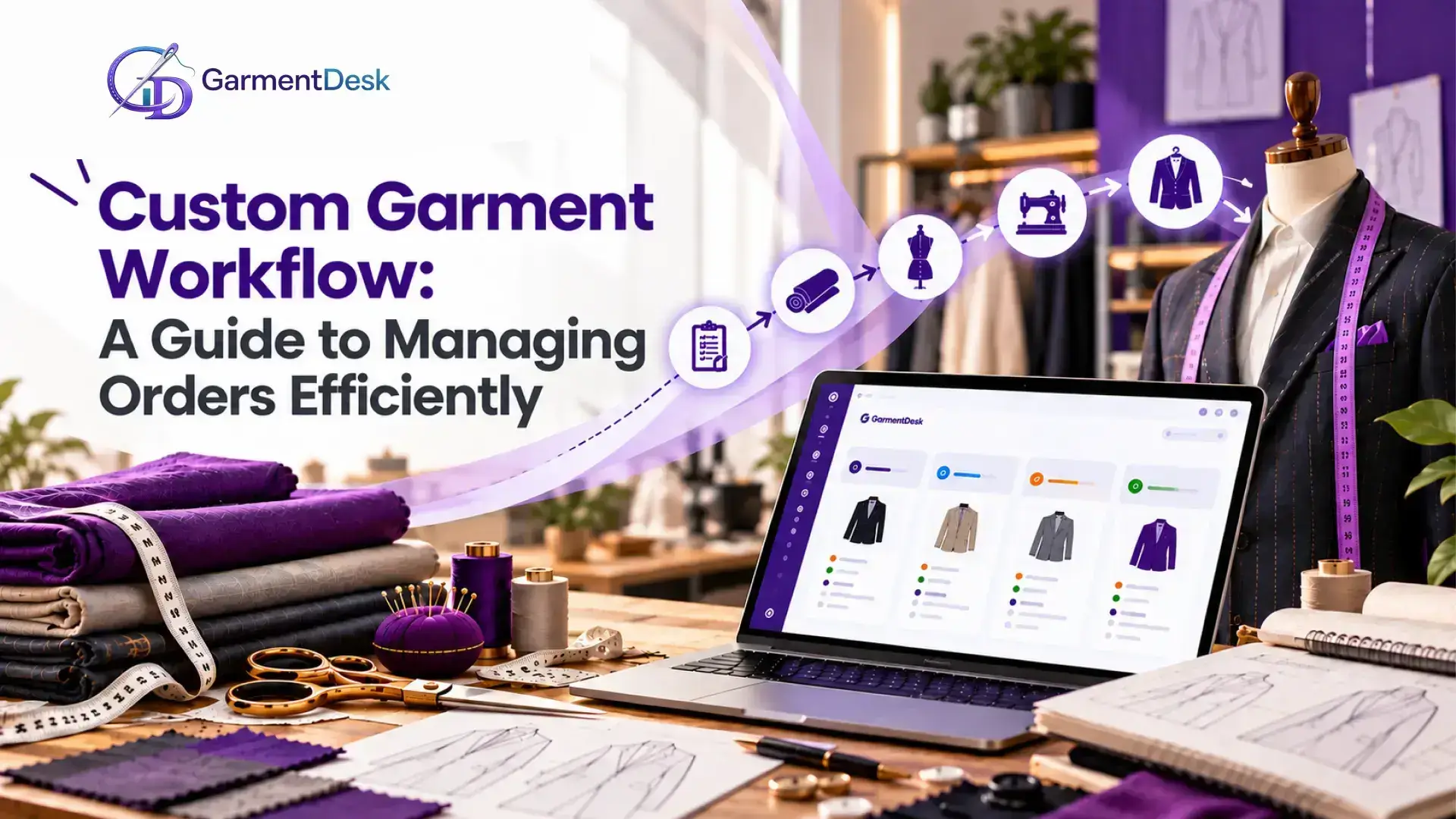
Order Confirmed → Cutting → Stitching → Fitting → Alteration → Quality Check → Ready for Pickup → Completed
Not every garment will require the same steps. The workflow should match the way your business actually works.
For example, a simple alteration order may go directly from measurement to alteration and quality checking, while a wedding outfit may require multiple fittings and adjustments.
Step 6: Track the Order Status
One of the biggest challenges in a busy tailor shop is knowing what is happening with every order.
A proper garment order tracking process lets you quickly identify:
- New orders
- Orders waiting for cutting
- Orders in stitching
- Orders waiting for fitting
- Orders requiring alterations
- Orders ready for pickup
- Overdue orders
- Completed orders
This reduces the need to search through notebooks, messages, or separate spreadsheets to find an order’s current status.
Step 7: Manage Fittings and Alterations
Fittings are an important part of custom clothing.
A garment may need adjustments after the first fitting. These changes should be recorded against the original order rather than being kept as separate notes.
For example:
Original instruction: Standard sleeve length
Fitting update: Reduce sleeve by 1 inch
Status: Alteration pending
This gives the team a clear record of what needs to be changed.
Good tailor shop order management is especially important here because alteration instructions can otherwise be missed or misunderstood.
Step 8: Perform a Final Quality Check
Before an order is marked complete, check the finished garment against the original requirements.
The quality check can include:
- Measurements
- Stitching
- Finishing
- Design details
- Buttons and accessories
- Customer alteration requests
- Garment cleanliness
- Final appearance
A simple checklist can help ensure that completed orders meet the expected requirements before they are handed to the customer.
Step 9: Complete Payment and Handover
Once the garment passes the final check, update the payment status and prepare the order for collection.
The order record should show whether the customer has:
- Paid in full
- Made a partial payment
- Has an outstanding balance
Keeping payment information connected to the order makes it easier to manage both the financial and operational sides of the business.
Common Problems With Manual Garment Order Management
Many tailoring businesses still use notebooks, paper measurement cards, spreadsheets, and messaging apps to manage different parts of an order.
These methods can work for a small number of orders, but problems become more likely as the business grows.
Common issues include:
Lost or unclear measurements
Handwritten measurements can be difficult to read or may be misplaced.
Missed production updates
Staff may not know whether an order is waiting for cutting, stitching, fitting, or alteration.
Difficult order searches
Finding an old customer order in multiple notebooks can take unnecessary time.
Forgotten alteration instructions
Changes made during fittings may not reach the person responsible for the alteration.
Difficulty monitoring deadlines
Without a central order list, overdue or approaching orders can be harder to identify.
Duplicate data entry
The same customer information may need to be written in several places.
How Tailoring Software Can Improve the Workflow
Tailor shop management software can bring customer information, measurements, orders, payments, and production status into one system.
Instead of managing each part separately, a tailoring business can maintain a single record for each customer and order.
For example, GarmentDesk can help tailoring businesses manage areas such as:
- Customer records
- Digital measurements
- Order tracking
- Tailoring workflow
- CRM
- Invoicing
- Reports
- Multiple orders
- Rework management
The purpose is simple: make it easier for a tailoring team to know what has been ordered, what needs to happen next, and what has already been completed.
How to Build a Workflow That Fits Your Business
There is no single workflow that works for every tailoring business.
A small alteration shop may only need:
Customer → Measurement → Alteration → Quality Check → Completed
A bespoke tailoring business may need:
Consultation → Measurement → Fabric Selection → Design Confirmation → Cutting → Stitching → Fitting → Alteration → Final Check → Completed
Start by writing down the actual steps your team follows today. Then identify where orders are commonly delayed, where information gets lost, and where customers frequently ask for updates.
Those areas should be the first parts of your workflow to improve.
Digital vs. Paper-Based Garment Workflows
Paper records can be useful, especially for businesses with a small number of orders. However, digital tools become increasingly useful as order volume increases.
| Paper-Based Workflow | Digital Workflow |
|---|---|
| Handwritten measurements | Digital measurement records |
| Physical order cards | Centralized order records |
| Manual status checking | Order status tracking |
| Separate payment records | Payment and invoice records |
| Difficult historical searches | Faster customer/order lookup |
| Higher risk of misplaced notes | Information stored in one system |
The right choice depends on the size and needs of the business. The key is having a process that your team can follow consistently.
Benefits of a Well-Managed Custom Garment Workflow
A structured workflow can improve daily operations without changing the craft itself.
Fewer mistakes
Clear order information reduces the chance of missing measurements or customer instructions.
Better order visibility
Staff can see which orders need attention and which are ready for the next stage.
Faster customer service
Customer and order information can be found without searching through multiple records.
Easier repeat orders
Stored measurements and previous order information make repeat business simpler to manage.
Better workload management
Teams can identify pending work and organize production more effectively.
Less administrative work
Digital records can reduce repetitive paperwork and manual tracking.
Final Thoughts
An efficient custom garment workflow gives a tailoring business a clear path from customer order to completed garment. It helps connect measurements, design requirements, production stages, fittings, alterations, payments, and final delivery into one organized process.
Whether you manage a small tailor shop or a growing custom clothing business, the most useful workflow is one that matches your actual operations and makes important information easy to find.
With tools such as tailoring business software, digital measurements, order tracking, CRM, invoicing, and workflow management, businesses can spend less time searching for information and more time focusing on producing quality garments.