Running a successful tailor shop involves much more than producing well-fitted garments. Tailors need to manage customer measurements, orders, alterations, deadlines, payments, staff, and daily shop operations while maintaining consistent quality.
A well-organized tailoring business can serve more customers, reduce mistakes, and create a better experience for clients. Whether you run a small tailoring shop, a bespoke tailoring business, or a clothing alteration service, having the right processes in place can make everyday work easier.
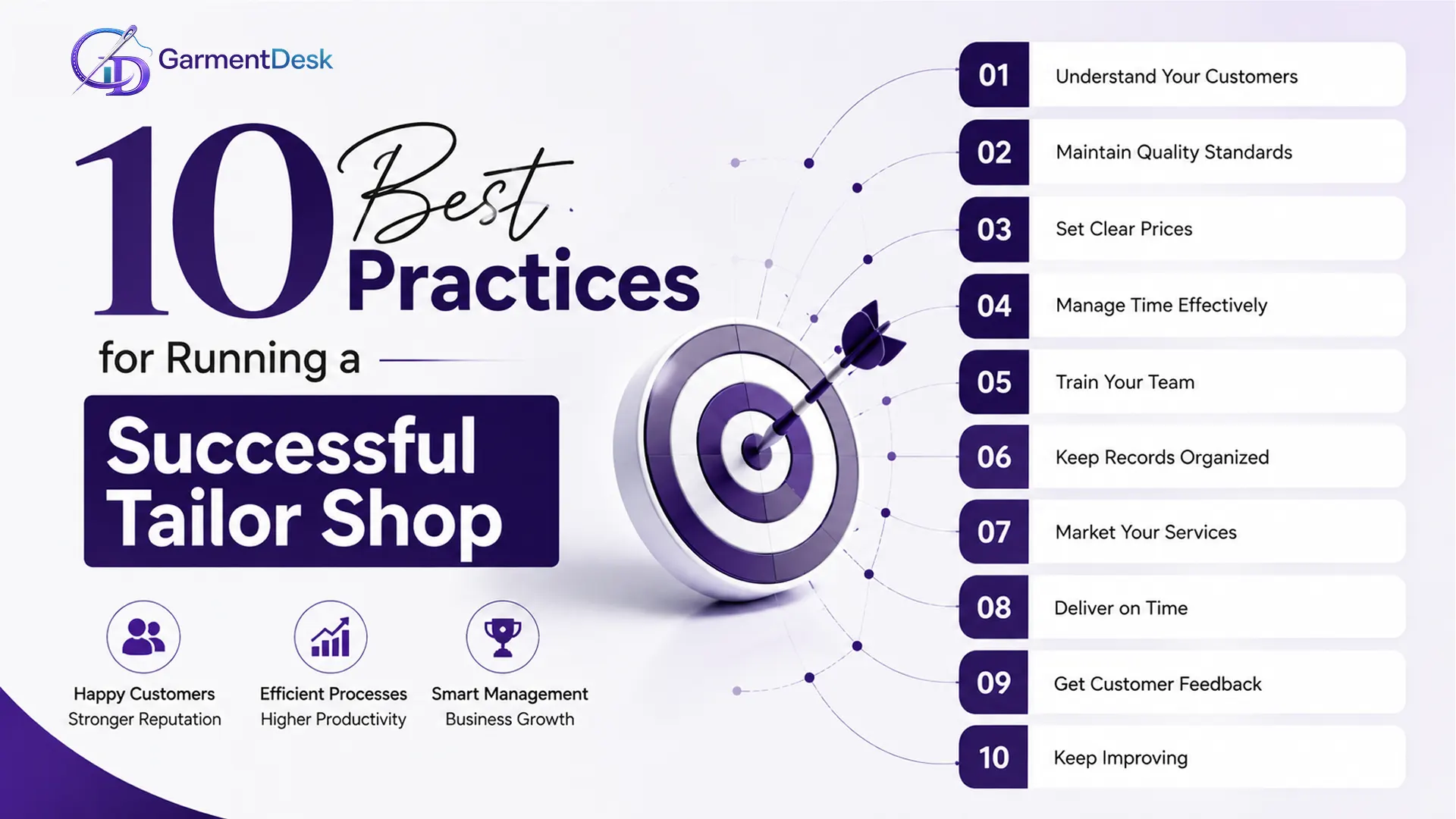
Here are 10 best practices for running a successful tailor shop and building a more organized, reliable, and profitable business.
1. Keep Customer Measurements Organized
Accurate measurements are one of the most important parts of a tailoring business. A small measurement mistake can result in an incorrect fit, additional alterations, wasted fabric, and an unhappy customer.
Instead of relying entirely on paper notebooks or loose measurement sheets, keep customer information organized in one place. Your records should include:
- Customer name and contact details
- Body measurements
- Preferred fitting information
- Previous orders
- Alteration history
- Special instructions
- Notes about garment preferences
Keeping a reliable customer measurement management system also makes repeat orders easier. When a returning customer places an order, you can quickly access their previous measurements instead of starting from scratch.
2. Create a Clear Order Management Process
A tailor shop may handle dozens or hundreds of orders at different stages. Without a consistent process, it can become difficult to know which garments are waiting for measurements, cutting, stitching, fitting, alteration, or collection.
Create a simple workflow for every order.
For example:
New Order → Measurements → Cutting → Stitching → Fitting → Alterations → Quality Check → Ready for Collection
Each order should have a clear status and due date. This helps your team understand what needs attention and reduces the possibility of orders being forgotten.
Tailoring software such as GarmentDesk can help businesses organize orders and customer information in a centralized system.
3. Set Realistic Delivery Dates
Customers want to know when their garments will be ready. Giving an unrealistic delivery date can create unnecessary pressure for your team and lead to customer complaints.
Before confirming a deadline, consider:
- Current workload
- Number of garments in the order
- Complexity of the work
- Required fittings
- Available staff
- Material availability
- Urgent orders already in production
It is better to provide a realistic delivery date than to promise a date your shop cannot consistently meet.
You can also prioritize urgent orders separately while keeping normal orders moving through the workflow.
4. Maintain Consistent Quality Control
Good tailoring depends on consistency. A garment that looks excellent one day but has fitting or finishing problems the next can affect customer trust.
Introduce a quality check before every order is marked as complete.
Check details such as:
- Measurements and final fit
- Stitching quality
- Buttons and zippers
- Hemlines
- Sleeve length
- Loose threads
- Fabric alignment
- Finishing and pressing
- Customer-specific instructions
For alteration businesses, check that the requested changes have been completed accurately.
A simple final inspection can catch problems before the customer arrives to collect the garment.
5. Communicate With Customers Throughout the Order
Customer communication should not stop after an order is placed.
Customers appreciate knowing what is happening with their garments, particularly when an order involves multiple fittings or has a longer delivery time.
Useful communication can include:
- Order confirmation
- Measurement confirmation
- Fitting reminders
- Ready-for-fitting notifications
- Ready-for-collection messages
- Payment reminders
- Updates about unexpected delays
Automated customer notifications can reduce the amount of time staff spend making routine calls and messages.
This is especially useful for busy tailor shops and alteration businesses that handle a large number of customer orders every week.
6. Keep Pricing and Quotes Clear
Customers should understand what they are paying for before work begins.
Create clear pricing for common tailoring and alteration services, such as:
- Trouser alterations
- Jacket alterations
- Dress alterations
- Suit alterations
- Shirt tailoring
- Bridal alterations
- Bespoke garments
- Repairs
- Custom adjustments
For complicated work, provide a quote before starting the job. If the scope of the work changes, communicate the additional cost with the customer before proceeding.
Clear pricing reduces misunderstandings and makes your business appear more organized.
For businesses managing many quotes and services, a centralized system can make it easier to track the estimated and final cost of each order.
7. Manage Your Workload and Staff Efficiently
As a tailoring business grows, managing staff becomes increasingly important.
Different employees may handle measurements, cutting, stitching, alterations, pressing, quality checks, and customer service. If responsibilities are unclear, work can become delayed or duplicated.
Assign clear responsibilities and monitor the workload across the team.
For example:
| Stage | Responsibility |
|---|---|
| Customer consultation | Front desk/tailor |
| Measurements | Tailor |
| Cutting | Cutter |
| Stitching | Tailor/machinist |
| Fitting | Tailor |
| Alterations | Alteration specialist |
| Quality check | Senior tailor |
| Collection | Front desk |
A tailor shop management system can also help managers see which orders are pending and where work is currently in progress.
8. Build Strong Customer Relationships
A successful tailoring business depends heavily on repeat customers and referrals.
Customers are more likely to return when they receive consistent service, accurate fitting, clear communication, and reliable delivery.
Keep useful customer information so you can provide a more consistent experience on future visits. For example, you may record:
- Previous measurements
- Preferred styles
- Common alterations
- Garment preferences
- Order history
- Special instructions
You can also follow up with customers after completing an order and encourage satisfied customers to leave a review.
Good customer service does not need to be complicated. Being accurate, responsive, and dependable can make a significant difference.
9. Track Payments, Invoices, and Outstanding Balances
Financial administration can become difficult when a shop handles many orders.
Every order should clearly show:
- Total price
- Deposit received
- Remaining balance
- Payment method
- Invoice details
- Payment status
Avoid depending on handwritten notes or separate spreadsheets that are difficult to keep updated.
Keeping payment information connected to customer orders makes it easier to identify outstanding balances and reduces administrative work.
If you want to centralize orders, customers, payments, and other daily operations, GarmentDesk provides tools designed specifically for tailoring businesses.
10. Use Technology to Simplify Daily Operations
Traditional methods can work for a small number of orders, but managing a growing tailoring business entirely with paper records can become difficult.
Digital tools can help you manage several areas of your business from one place, including:
- Customer management
- Measurements
- Orders
- Alterations
- Bespoke workflows
- Quotes
- Invoices
- Payments
- Customer notifications
- Staff permissions
- Business reports
The goal is not to add unnecessary technology to your business. The goal is to reduce repetitive administrative work and make important information easier to find.
A dedicated tailor shop management software solution can be particularly useful when your business has multiple employees, locations, or a growing number of orders.
You can book a GarmentDesk demo to explore how a digital system can fit into your tailoring workflow.
Common Problems That Can Affect a Tailor Shop
Even skilled tailors can face operational problems as their business grows. Some common issues include:
Lost or Incomplete Customer Information
Missing measurements or unclear customer instructions can result in unnecessary rework. Keeping customer records organized helps prevent these problems.
Missed Deadlines
When orders are tracked manually, it can be difficult to identify approaching deadlines. A clear order workflow makes pending work easier to monitor.
Poor Communication
Customers may repeatedly call to ask whether their garments are ready. Order updates and notifications can reduce these unnecessary enquiries.
Payment Tracking Problems
When deposits and balances are recorded separately from orders, it becomes easier to miss outstanding payments.
Difficulty Managing Multiple Staff
Without clear responsibilities and order statuses, managers may struggle to understand who is working on which garment.
Identifying these problems early allows you to improve your processes before they affect customer satisfaction.
How to Make a Tailor Shop More Efficient
Improving efficiency does not necessarily mean taking on more work. It often means removing unnecessary steps from your existing processes.
Start by identifying where your team spends the most time.
For example, if employees regularly search through notebooks for customer measurements, digitizing those records could save time. If staff spend hours contacting customers about completed orders, automated notifications could reduce that workload.
Review your workflow regularly and look for repetitive tasks that can be simplified.
The most effective approach is to improve one process at a time rather than changing everything at once.
Final Thoughts
Running a successful tailor shop requires a combination of tailoring expertise and organized business processes. Accurate measurements, clear order management, realistic deadlines, quality control, customer communication, and reliable payment tracking can all contribute to a smoother operation.
As your customer base and order volume increase, manual processes can become harder to manage. Moving important information into a centralized tailor shop management system can help your team spend less time searching for information and more time focusing on customers and garment quality.
If you are looking for a dedicated solution for managing tailoring and alteration operations, explore GarmentDesk or book a demo to see how it can support your daily workflow.