
Managing customer orders is one of the most important parts of running a tailoring business. Whether you operate a small tailor shop, a bespoke tailoring studio, or a growing tailoring business with multiple staff members, a poorly managed order can lead to missed deadlines, incorrect measurements, payment issues, and unhappy customers.
Many tailoring businesses still manage orders using notebooks, spreadsheets, WhatsApp messages, or separate systems for measurements and payments. These methods may work when the business is small, but they can become difficult to manage as the number of customers and orders increases.
Understanding the common order management mistakes in tailoring businesses can help you identify where your current process needs improvement.
1. Recording Customer Orders Manually
Writing every order in a notebook can seem simple, but manual records can easily become difficult to search and maintain.
A customer may have several orders, different garment types, multiple measurements, and specific preferences. Finding the right information quickly becomes challenging when everything is stored on paper.
A digital tailor shop order management system can keep customer and order information together, making it easier for staff to find the details they need.
2. Not Recording Measurements Properly
Measurements are critical in tailoring. A small mistake can result in a garment that does not fit correctly.
Another common problem is relying on old measurement records without checking whether they are still accurate.
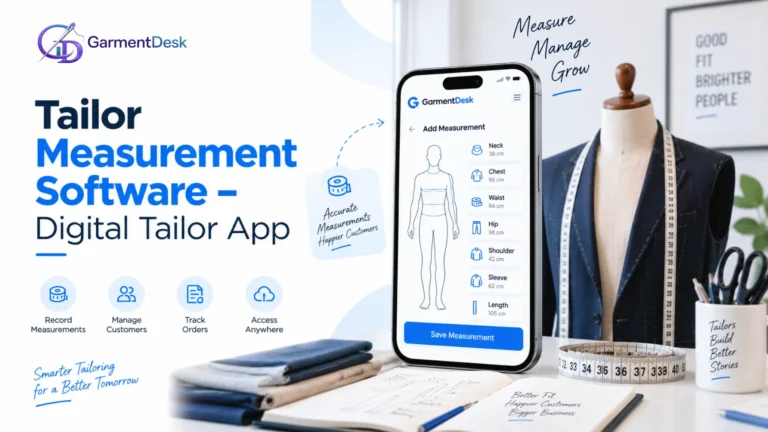
Using tailor measurement software allows businesses to store customer measurements digitally and retrieve them when a new order is created. Staff can also update measurements when a customer’s requirements change.
3. Losing Track of Order Status
Tailoring orders normally pass through several stages, such as:
- Order received
- Measurements recorded
- Cutting
- Stitching
- Alterations
- Quality checking
- Ready for collection
- Delivered
When these stages are tracked manually, it can be difficult to know exactly where an order stands.
Tailoring management software can provide a clearer view of active orders and their current status, helping staff identify which jobs need attention.
4. Missing Delivery Deadlines
Customers usually provide a specific date when they need their garments. Weddings, festivals, business events, and special occasions can make deadlines particularly important.
If delivery dates are recorded in different notebooks, calendars, or messages, an order can easily be overlooked.
A proper tailoring business management software system can help organize due dates and make upcoming deliveries easier to monitor.
5. Keeping Customer Details Separate From Orders
Another frequent mistake is storing customer information separately from order information.
For example, customer contact details may be in a phone, measurements in a notebook, and order details in a spreadsheet. Staff then have to check several places before answering a simple customer question.
A centralized tailor shop software solution can connect customer profiles with their orders, measurements, payment records, and other relevant details.
6. Not Tracking Payments Clearly
Payment confusion can create unnecessary problems for both the tailor and the customer.
Businesses may accept deposits, partial payments, or final payments. If these transactions are recorded manually, it becomes harder to determine the remaining balance.
An order management system with invoicing and payment tracking can help staff see:
- Total order value
- Amount paid
- Outstanding balance
- Payment history
- Invoice details
This provides a clearer record when customers ask about their payments.
7. Relying Too Much on WhatsApp Messages
WhatsApp can be useful for communicating with customers, but it should not become the main place for storing order information.
Important details such as measurements, delivery dates, garment specifications, or alteration requests can become difficult to find among hundreds of messages.
Customer communication should support the order management process rather than replace it.
8. Not Checking Orders Before Delivery
A garment may be completed but still require a final check.
Before an order is marked as ready, staff should verify important details such as:
- Correct customer
- Correct garment
- Measurements
- Alteration requests
- Finishing quality
- Accessories or additional items
- Payment status
- Delivery date
A simple final-check process can reduce avoidable mistakes and repeat work.
9. Using Separate Tools for Every Task
Some tailoring businesses use one application for customer records, another for invoices, spreadsheets for measurements, and paper notes for production.
The problem is not necessarily the individual tools. The issue is that information becomes scattered.
Bespoke tailoring software can bring important parts of the workflow into one system, helping businesses manage customers, orders, measurements, invoicing, and production more consistently.
10. Not Reviewing Order Data
Order records can provide useful information about how a tailoring business operates.
For example, you may want to know:
- Which garments are ordered most often?
- How many orders are completed each month?
- Which orders are overdue?
- How much revenue is generated?
- Which customers place repeat orders?
- How much is still outstanding?
Tailor shop software with reporting features can make this information easier to review and use for day-to-day business decisions.
How to Improve Tailor Shop Order Management
You do not need to completely change your workflow overnight. Start by identifying the parts of your process where mistakes happen most often.
A practical order management process should include:
Keep Customer Information in One Place
Maintain customer contact information, order history, measurements, and preferences in an organized digital record.
Create a Clear Order Workflow
Define the stages an order follows from the initial booking through to final delivery. Everyone on the team should understand what each status means.
Record Measurements Digitally
Use digital measurement software to reduce reliance on handwritten measurement records and make previous measurements easier to access.
Track Payments With Each Order
Keep deposits, balances, and payment history connected to the relevant order.
Monitor Delivery Dates
Review upcoming deadlines regularly so urgent orders are identified before they become overdue.
Use Reports to Identify Problems
Regular reporting can help identify delays, outstanding payments, frequently ordered garments, and other operational issues.
How GarmentDesk Helps With Order Management
GarmentDesk is designed to help tailoring businesses manage their daily operations in one place. Instead of relying on notebooks and disconnected spreadsheets, businesses can organize customer information, orders, measurements, invoicing, and other workflow details digitally.
Its features include order tracking, a bespoke workflow, CRM, invoicing, and reporting, helping tailor shops keep important information connected throughout the order lifecycle.
For businesses looking to move from manual processes to a more organized system, tailoring management software can make everyday order handling easier to manage as the business grows.
Final Thoughts
The common order management mistakes in tailoring businesses are often simple problems: misplaced information, incorrect measurements, missed deadlines, unclear payment records, or poor communication between staff.
The right process can prevent many of these issues. By keeping customer information organized, tracking every order stage, recording measurements digitally, monitoring payments, and reviewing upcoming deliveries, a tailoring business can create a more reliable workflow.
For growing tailor shops, tailor shop order management software can provide the structure needed to manage more customers and orders without adding unnecessary manual work.